Conveyor Manufacturer vs. Integrator: Choosing the Right Partner for 2026
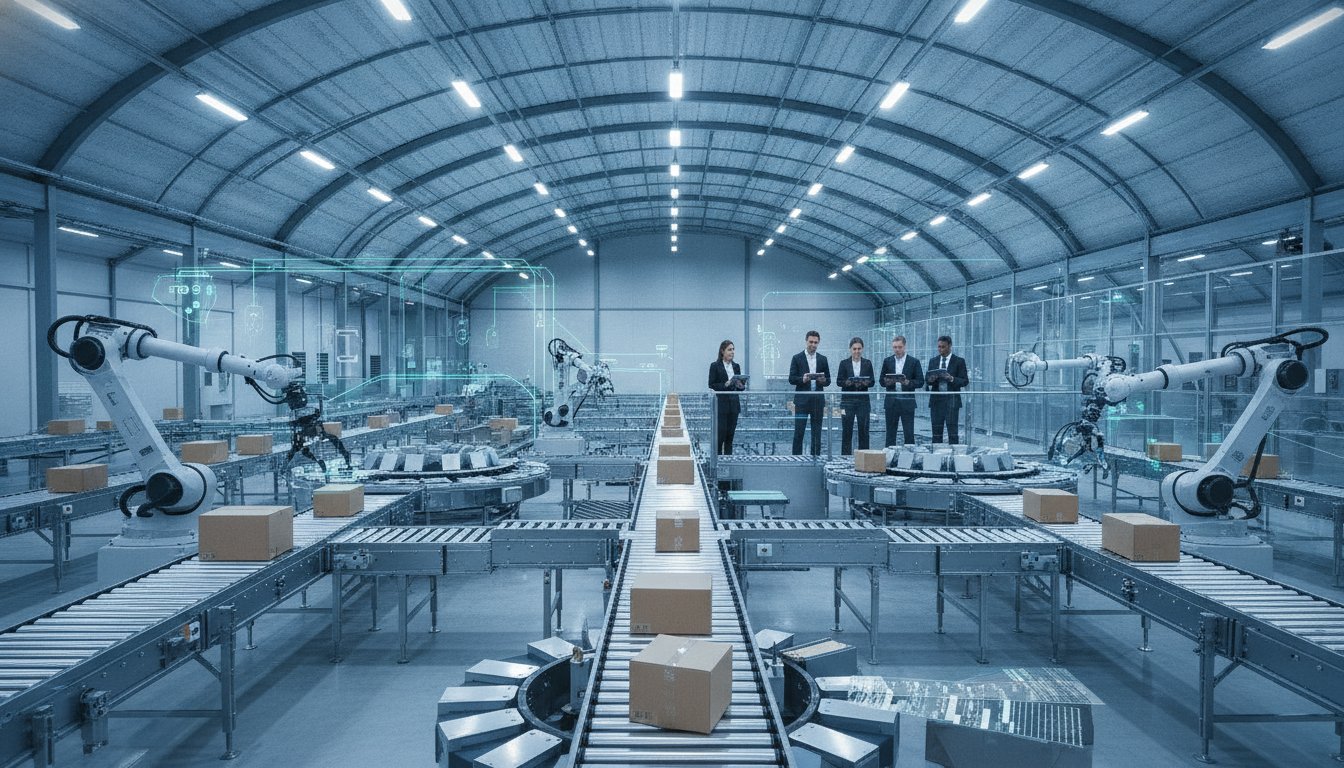
The lowest quote for a high-speed sorter might actually be the most expensive mistake your facility makes in 2026. It's understandable why you'd want to go straight to the source to save on capital expenditures. However, the debate of conveyor manufacturer vs integrator isn't just about the initial price tag. It's about whether your multi-vendor system will actually communicate when the power turns on. You're likely feeling the pressure to scale throughput while fearing that poor engineering could lead to project delays or fragmented automation that fails to deliver.
We understand that your primary goal is a seamless, automated warehouse flow that minimizes maintenance and maximizes uptime. This article will show you how to choose the right partner to ensure your facility's ROI remains clear through optimized process engineering. We'll examine the critical differences between buying equipment direct and partnering with an integrator who builds cohesive ecosystems. From analyzing the 7-year total cost of ownership to understanding how to bridge the gap between robotics and traditional hardware, we'll provide the roadmap you need for a future-ready operation.
Key Takeaways
- Identify the core functional differences between sourcing specific hardware and investing in a comprehensive, multi-brand system design.
- Navigate the conveyor manufacturer vs integrator decision by identifying specific scenarios, like simple module replacements, where buying direct is most efficient.
- Explore how professional integration resolves the complexities of modern e-commerce by synchronizing mechanical systems with advanced warehouse software.
- Analyze project management factors, including permits and electrical coordination, that often determine the success of high-throughput automation.
- Gain insights into calculating the true ROI of your facility by looking beyond initial costs toward long-term operational stability and maintenance.
Conveyor Manufacturer vs. Integrator: Defining the Roles
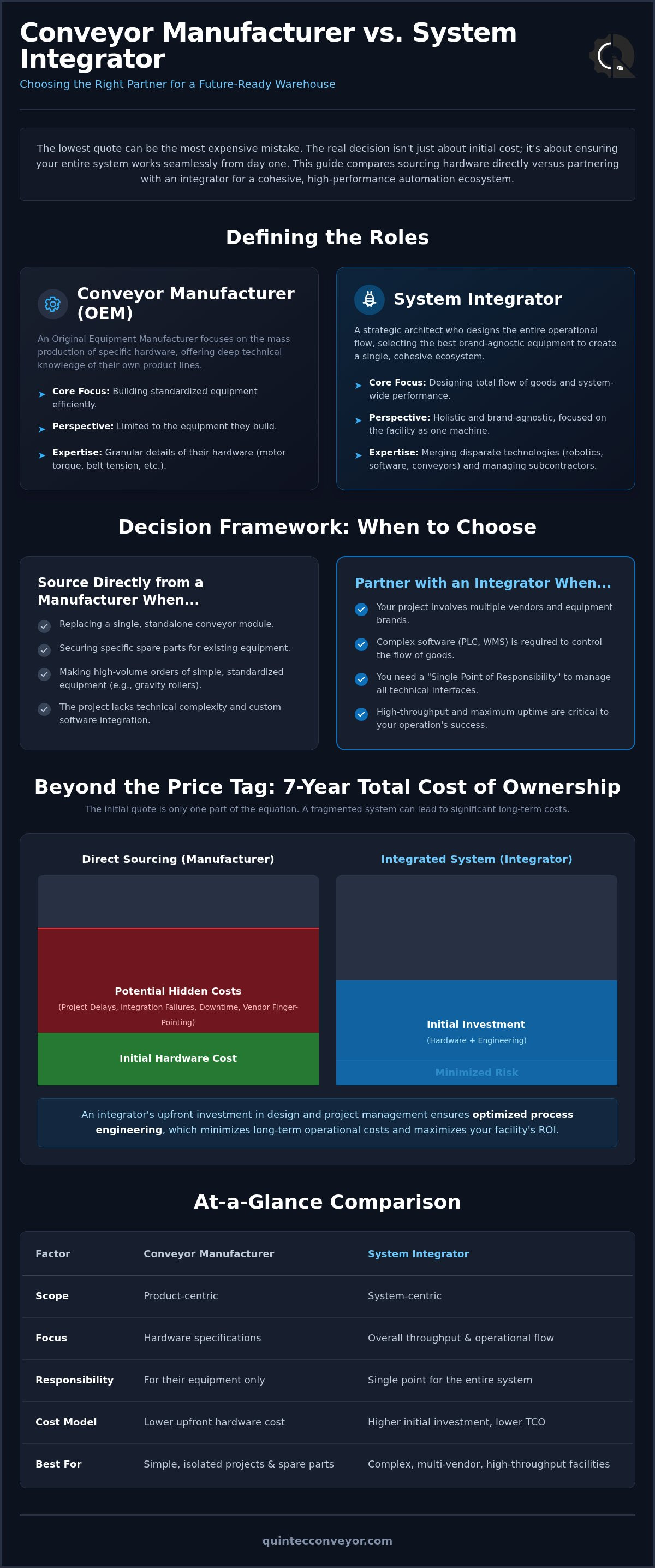
Understanding the distinction between a manufacturer and an integrator is the first step toward a successful facility upgrade. At its core, the conveyor manufacturer vs integrator debate centers on the scope of the project. A manufacturer is an Original Equipment Manufacturer (OEM) that focuses on the physical production of specific hardware. Conversely, an integrator acts as a strategic architect. They don't just supply parts; they design the entire operational flow. This distinction is the cornerstone of effective 2026 capital expenditure planning because the margin for error in modern logistics has vanished. Many facilities now adopt a "Single Point of Responsibility" model. In this framework, a single partner manages every technical interface, which eliminates the common finger-pointing that occurs when multi-vendor systems fail to communicate.
What to Expect from Conveyor System Manufacturers
Manufacturers are the specialists of the industrial world. They excel at mass-production efficiency and maintaining standardized product lines. When you work directly with them, you gain access to deep, granular technical knowledge regarding their specific hardware. They understand the intricacies of motor torque, belt tension, and the mechanical limits of a particular Conveyor system better than anyone else. However, their perspective is often limited to the equipment they build. They rarely possess the internal resources to manage facility-wide software logic or the complex handshakes required between different brands of automation. If your project requires a simple, standalone replacement of a single line, the manufacturer's direct expertise is often the most cost-effective path.
The Value Proposition of a Material Handling Integrator
A material handling integrator provides a broader, brand-agnostic perspective. Instead of pushing a specific catalog, they select the best equipment for your unique throughput requirements. Their primary value lies in comprehensive warehouse design services that prioritize the total flow of goods over individual machine specs. Integrators are experts at merging disparate technologies, such as high-speed conveyors, robotics, and automated racking, into a single, cohesive ecosystem. They handle the "connective tissue" of a project, including:
- System-wide PLC programming and software integration.
- Coordinating mechanical and electrical subcontractors.
- Managing the physical handoffs between different equipment brands.
- Ensuring the entire layout meets 2026 safety and throughput standards.
By choosing an integrator, you're investing in a partner that views your facility as a single machine rather than a collection of separate parts. This approach is essential for high-throughput environments where a five-second delay at a single transition point can derail an entire shift's productivity.
When to Source Directly from Conveyor System Manufacturers
Sourcing directly from an Original Equipment Manufacturer (OEM) is often the most efficient path for facilities with well-defined, isolated requirements. If you're replacing a single, standalone conveyor module within an established line, a direct purchase ensures mechanical compatibility without the overhead of a full system redesign. This approach is also the standard for securing conveyor spare parts for specific equipment models. When your maintenance team already understands the motor specs and belt requirements, bypassing the middleman speeds up procurement and minimizes operational downtime.
High-volume orders of standardized equipment also favor the manufacturer model. For example, if you need 500 feet of basic gravity roller conveyor for simple point-to-point transport, the manufacturer's mass-production efficiency provides a clear price advantage. In these scenarios, the decision of conveyor manufacturer vs integrator leans toward the manufacturer because the project lacks the technical complexity that requires high-level process engineering or custom software handshakes.
The Benefits of Direct Manufacturer Sourcing
Direct sourcing typically yields lower initial unit costs on bulk hardware orders. You avoid the markup associated with third-party design and consultation services. Additionally, you gain direct access to factory-trained technicians who possess specialized knowledge of that specific machine's internal components. For facilities with robust internal engineering teams, this model offers a simplified procurement process that keeps control of the design logic in-house. It's a transactional relationship built on hardware reliability and technical specifications.
The Limitations of the Manufacturer-Only Model
The primary risk of a manufacturer-only approach is the creation of "Islands of Automation." While each individual machine might function perfectly, they may fail to sync with the broader facility workflow. This lack of cross-platform communication often contradicts the established principles of manufacturing systems integration, which emphasizes a unified architecture for material handling. When equipment from different vendors cannot "talk" to one another, the facility's overall throughput suffers.
You must also account for hidden costs. When you buy direct, your internal team inherits the burden of making disparate components work together. If the final system fails to meet throughput goals, the manufacturer is only responsible for their specific piece of hardware, not the total process. For projects involving complex robotics or multi-brand layouts, partnering with a strategic guide ensures total accountability for the final result and prevents expensive engineering oversights during the installation phase.
Why High-Throughput Facilities Require a System Integrator
High-volume e-commerce hubs operate with razor-thin margins and demanding delivery windows. In these environments, the mechanical hardware is only half of the equation. The real challenge lies in the system logic that governs how that hardware behaves. When choosing between an OEM and a system integrator, high-throughput facilities often find that the latter is essential for bridging the gap between physical industrial conveyor systems and Warehouse Management Software (WMS). An integrator uses process engineering to simulate and identify potential bottlenecks before a single bolt is turned. Analyzing the conveyor manufacturer vs integrator choice requires looking past the equipment and toward the total process. They design for 2026 growth, ensuring that the infrastructure you install today won't be obsolete when your volume doubles next year.
Integrating Robotics and Automated Sortation
Modern sortation is a data-driven exercise. High-speed cross-belt sorter systems require precise logic to handle diverse package profiles without damaging goods. An integrator's role is to coordinate conveyor speeds with robotic picking arms and Autonomous Mobile Robots (AMRs). They manage the constant stream of data required for real-time tracking, ensuring that every item is diverted with surgical accuracy. This level of synchronization is rarely available from a single-brand manufacturer. It requires a partner who understands how to orchestrate the "handshake" between different automation protocols. Consequently, the conveyor manufacturer vs integrator decision becomes a question of how well your robots and conveyors will actually work together on the floor.
Custom Solutions for Complex Footprints
Rarely does a facility have a perfectly open floor plan. Integrators excel at using modular conveyor systems to maximize vertical space and navigate tight layouts. They engineer custom inclines, declines, and spiral conveyors that standard product catalogs simply don't cover. This expertise allows you to reclaim valuable square footage by moving product through underutilized overhead areas. Beyond the machinery, they ensure that ergonomic workstations are seamlessly woven into the automated flow. This holistic approach protects your workforce from repetitive strain while maintaining the high-velocity throughput required for modern logistics. By designing around your specific footprint, an integrator ensures that every inch of your facility contributes to the bottom line.
Comparison Framework: Cost, ROI, and Project Management
Evaluating the financial impact of a new installation requires looking far beyond the initial purchase price. Data suggests that the 7-year total cost of ownership (TCO) for industrial automation systems is typically 1.8 to 2.5 times the initial capital expenditure. This figure includes maintenance, spare parts, and the "soft costs" associated with internal engineering time. When you analyze the conveyor manufacturer vs integrator dynamic, you must decide who carries the risk of a 1% design error. In a multi-million dollar system, a minor misalignment in sortation logic or a missed electrical handshake can lead to catastrophic downtime. Integrators mitigate this risk by providing a single point of project management. They handle everything from municipal permits to the complex coordination of mechanical and electrical subcontractors.
The 'Middleman' Myth: Analyzing Integrator Fees
The assumption that an integrator is simply an expensive middleman ignores the realities of industrial procurement. Professional integrators often leverage significant volume purchasing power with multiple equipment manufacturers, which frequently offsets their engineering fees. By choosing an integrated approach, you also reduce your internal payroll costs. You don't need to dedicate your own senior engineers to full-time project oversight for six months. Additionally, you gain the security of a single warranty point. Instead of chasing three different vendors when a multi-brand system fails, you have one partner responsible for the entire facility's performance. This streamlined accountability is vital for maintaining long-term stability and modern excellence.
Timeline and Lifecycle Comparison
A manufacturer-led project often follows a rigid, equipment-first timeline that may not align with your facility's operational needs. In contrast, an integrated project schedule prioritizes the final go-live date. This holistic view ensures that infrastructure prep, software testing, and physical installation happen in a logical, structured sequence. Long-term success also depends on your team's ability to recognize the Warning Signs of Impending Conveyor Maintenance before they result in unplanned outages. A managed system includes comprehensive post-installation support and specialized training, ensuring your staff is prepared for operational success. To ensure your facility remains at the cutting edge of efficiency, you should partner with a strategic guide who can map out your entire system lifecycle from design to long-term maintenance.
The Quintec Approach: Your Strategic Integration Partner
Quintec stands at the intersection of proven experience and modern innovation. We bring over 100 years of collective industry expertise to every facility we optimize. While the conveyor manufacturer vs integrator debate often focuses on hardware, we prioritize the engineering logic that makes that hardware perform. Our brand-agnostic approach ensures we aren't limited by a single product catalog. Instead, we select the specific equipment that aligns with your unique KPIs, whether that requires high-speed sortation or heavy-duty infrastructure. Our national reach across the United States means we provide comprehensive material handling solutions that deliver long-term stability and modern excellence to every client.
Our process is methodical and thorough, mirroring the complexity of the industrial projects we manage. We move from initial engineering and design to final installation with a focus on total project management. By serving as your strategic guide, we eliminate the communication gaps that often derail large-scale automation projects. We take full responsibility for the "handshake" between different equipment brands, ensuring your facility operates as a single, high-performance machine rather than a collection of isolated parts.
Engineering Excellence and Innovation
Our process engineering team doesn't just install conveyors; they optimize entire operational flows. We design custom conveyor systems that account for every nuance of your facility's footprint and throughput requirements. This includes implementing the latest 2026 automation trends, such as warehouse robotics and AI-driven sortation logic. We're committed to system reliability, which is why our engineering includes a proactive focus on conveyor maintenance. We build for the future, ensuring your system is ready to scale as market demands shift. Resolving the conveyor manufacturer vs integrator choice becomes simple when you see the results of a system designed for total lifecycle success.
Getting Started with Quintec Conveyors
Every successful project begins with a deep dive into your current operations. During the consultation phase, we assess your facility bottlenecks to identify exactly where efficiency is lost. We don't just offer equipment; we develop a scalable roadmap for your warehouse automation journey. This strategic planning ensures your CapEx investments today remain relevant as your volume grows. If you're ready to move beyond fragmented hardware and toward a unified, automated ecosystem, we're here to lead the way. Partner with Quintec for your next integrated conveyor project and experience the confidence that comes with a century of collective expertise.
Strategic Planning for a Future-Ready Facility
Choosing between a conveyor manufacturer vs integrator determines the trajectory of your facility's operational success. While sourcing hardware directly works for isolated module replacements, high-throughput environments require the process engineering and system logic that only an integrator provides. True ROI isn't found in the initial purchase price but in the long-term stability of a cohesive, automated workflow that minimizes downtime.
Quintec offers 100+ years of collective industry experience to help you bridge the gap between mechanical hardware and advanced automation. With full-scale national installation services and specialized warehouse robotics expertise, we ensure your facility is ready for the demands of 2026. Don't leave your throughput to chance with fragmented, single-point solutions. Request a Consultation for Your Integrated Conveyor System today to begin optimizing your facility's flow. We're ready to help you build a more efficient, reliable future.
Frequently Asked Questions
Is it cheaper to buy conveyors directly from a manufacturer?
Sourcing hardware directly from a manufacturer often appears cheaper on paper due to lower unit costs. However, this price doesn't account for the soft costs of internal engineering and the risk of system incompatibility. In the conveyor manufacturer vs integrator comparison, an integrator's value lies in reducing the 7-year total cost of ownership. They leverage volume purchasing power and prevent expensive design errors that frequently occur when managers attempt to self-manage complex installations.
What exactly does a conveyor system integrator do?
A conveyor system integrator acts as the strategic architect for your material handling workflow. Unlike a manufacturer who focuses on building specific hardware, an integrator selects the best components from multiple brands to create a cohesive ecosystem. They manage the entire project lifecycle, including initial process engineering, mechanical installation, and electrical coordination. Their primary goal is to ensure that disparate machines work together to meet your facility's specific throughput and ROI targets.
Can an integrator help me if I already have equipment from different manufacturers?
Yes, helping facilities with mixed-brand equipment is a core function of a professional integrator. We specialize in resolving the "Islands of Automation" problem where different machines fail to communicate. By implementing unified control logic and custom software handshakes, an integrator can bridge the gap between your existing infrastructure and new hardware. This ensures a seamless flow of goods regardless of which original equipment manufacturers produced the individual modules or robotic components.
How long does a typical conveyor integration project take to complete?
The timeline for a conveyor integration project depends on the scale and complexity of the automation required. A straightforward line expansion might be completed in a few months, while a full-scale warehouse automation project involving robotics can take significantly longer. Quintec follows a methodical process that prioritizes your final go-live date. This structured approach ensures that engineering, procurement, and installation phases overlap efficiently to minimize operational downtime and meet your 2026 growth targets.
Does Quintec provide maintenance for systems they didn't install?
Quintec offers professional conveyor maintenance and process engineering services to optimize existing material handling setups. Our goal is to ensure the long-term reliability and mechanical efficiency of your equipment, regardless of the original installer. Regular maintenance is essential for identifying warning signs before they lead to unplanned outages. By leveraging our 100+ years of collective experience, we help facilities extend the lifecycle of their systems and maintain peak performance across their entire national infrastructure.
What are the biggest risks of managing a conveyor installation without an integrator?
The biggest risk of bypassing an integrator is the lack of a single point of responsibility. When a multi-vendor system fails to meet throughput goals, individual manufacturers often only take responsibility for their specific components. This leads to project delays and finger-pointing during the troubleshooting phase. Without professional oversight, you also risk significant engineering errors in sortation logic or electrical integration, which can cost millions in lost productivity and emergency repairs over the system's lifecycle.
How do I know if my facility is ready for warehouse robotics?
Your facility is likely ready for warehouse robotics if you're struggling to scale throughput with manual labor or facing high error rates in sortation. A process engineering audit can determine your readiness by analyzing your current flow and calculating the potential payback period. Modern trends in 2026 show that robotics are increasingly cost-effective for high-volume e-commerce hubs. If your goal is a future-ready operation that maintains a clear ROI, integrating robotics is often the logical next step.
Do integrators provide the software needed to run the conveyor system?
Integrators are responsible for the connective tissue of your system, which includes the necessary control software and PLC programming. They ensure that your physical conveyor hardware communicates perfectly with your Warehouse Management System. This software integration is what allows for real-time tracking, automated sortation, and data-driven decision-making. By managing the software handshake between different brands, an integrator transforms separate pieces of equipment into a single, high-performance machine that meets your specific operational requirements.