The Strategic Guide to CDLR Conveyors: Engineering Heavy-Duty Flow in 2026
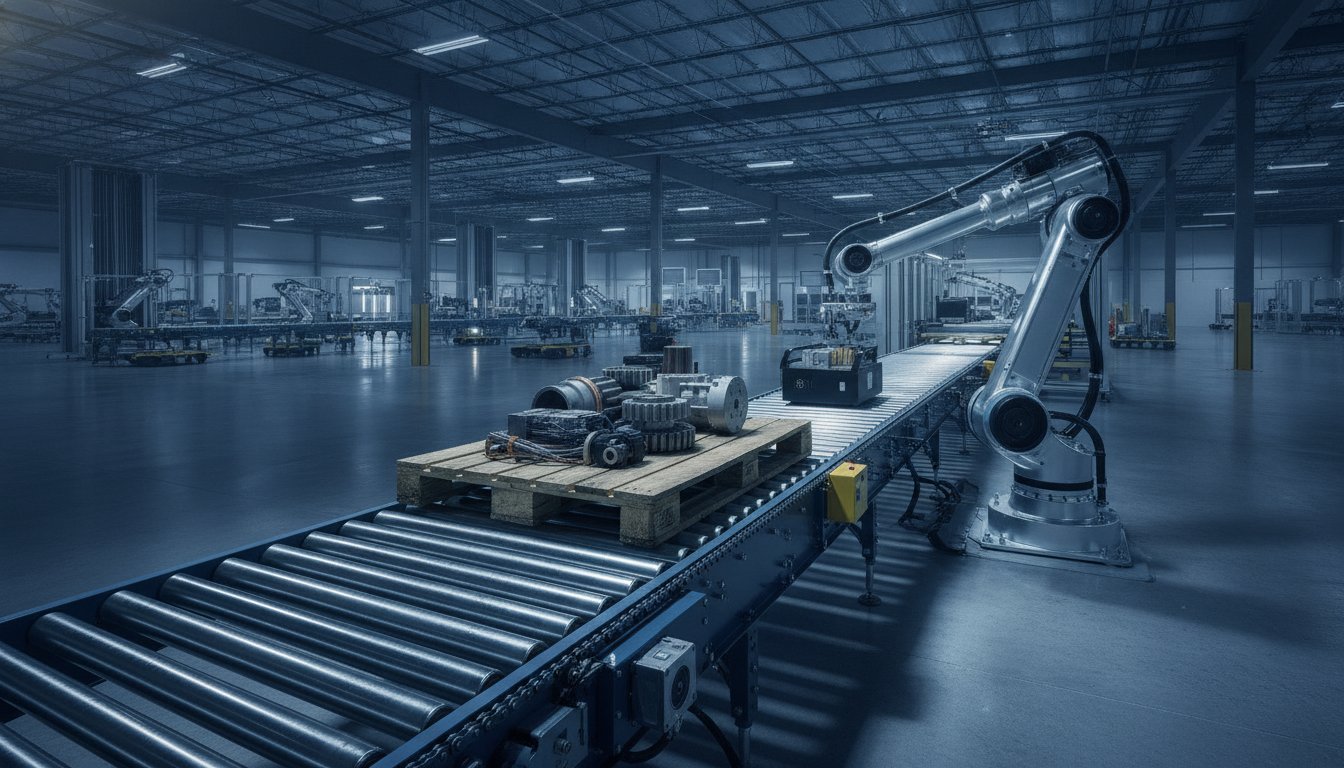
In 2026, the most expensive component of your material handling system isn't the steel or the motors; it's the hidden cost of a pallet that slips three inches during a high-speed robot handover. While belt-driven systems often falter under the weight of 2,000lb loads or succumb to oily floor conditions, the cdlr conveyor remains the industry standard for uncompromising stability. You've likely experienced the relentless maintenance cycles and unpredictable downtime that occur when standard equipment is pushed beyond its physical limits.
This strategic guide promises to help you master the technical specifications and advanced applications of Chain Driven Live Roller systems to optimize your heavy-load throughput. We'll examine how to leverage the latest modular designs, which currently qualify for 100% bonus depreciation under 2026 tax laws, to build a reliable, zero-slip foundation for your facility. By the end of this article, you'll understand how to integrate these rugged systems with AGVs and automated palletizers while adhering to the ASME B20.1-2024 safety standards for a long, predictable equipment lifecycle.
Key Takeaways
- Learn why the positive drive mechanism of a cdlr conveyor is essential for eliminating load slippage during heavy-duty pallet transport.
- Understand the mechanical differences between chain-to-chain and single-sprocket configurations to select the appropriate durability level for your specific environment.
- Discover how to conduct a comprehensive load profile analysis to ensure your conveyor system integrates flawlessly with modern robotics and AGVs.
- Compare CDLR against BDLR and MDR systems to identify the most efficient drive solution based on load weight and environmental conditions.
- Gain insights into leveraging custom process engineering and predictive maintenance to maximize the operational lifecycle of your industrial infrastructure.
Understanding Chain Driven Live Roller (CDLR) Systems
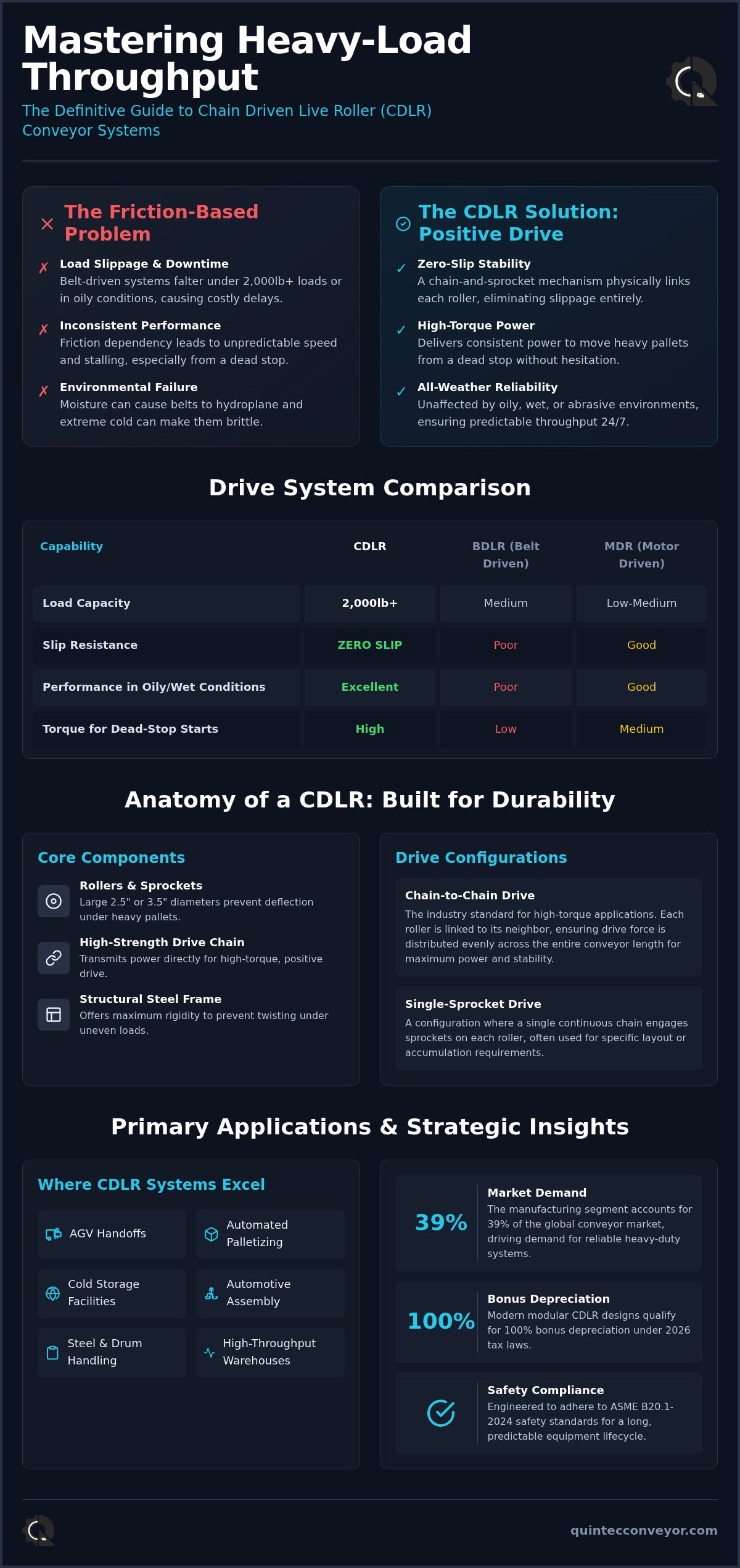
A cdlr conveyor represents the heavy-duty backbone of modern industrial logistics. Unlike standard gravity rollers or friction-dependent belt systems, these units utilize a series of sprockets and high-strength chains to transmit power directly to each roller. This mechanical configuration classifies them as a "positive drive" conveyor system, meaning the movement of the load isn't dependent on friction between a belt and the roller. In 2026, as the manufacturing segment accounts for roughly 39% of the global conveyor market, the demand for this level of mechanical certainty has reached an all-time high. Facility managers now prioritize these systems for loads that would otherwise cause belt-driven alternatives to slip, stall, or fail prematurely.
The Mechanical Advantage of Positive Drive
The primary benefit of a cdlr conveyor is its ability to maintain consistent speed across the entire line, regardless of load weight variations. Because each roller is physically linked to the drive motor via a chain, the system delivers high torque that’s essential for moving heavy pallets or castings from a dead stop. This design is particularly effective in oily, wet, or abrasive environments. While moisture can cause a belt to hydroplane over a drive pulley, a chain-and-sprocket interface remains locked. This ensures that your throughput remains predictable even in the harshest industrial conditions where traditional drive methods falter.
Primary Industrial Applications
CDLR systems are the preferred solution for transporting 2,000lb+ pallets, steel drums, and large structural components. In 2026, we see a massive shift toward integrating these conveyors with automated guided vehicle systems (AGVs). For an AGV to successfully hand off a heavy load, the receiving conveyor must provide a stable, non-slip surface that can handle sudden acceleration. These systems are also becoming standard in automated cold storage facilities, where extreme temperatures can make belts brittle or prone to contraction. Whether it's an automotive assembly line or a high-density warehouse, the CDLR provides the structural integrity required for 24/7 heavy-duty operations.
By providing a rugged foundation that resists environmental wear, these conveyors allow engineers to design workflows around the product rather than the limitations of the equipment. They handle the most demanding palletized loads with a level of reliability that friction-based systems simply cannot match in high-output environments.
The Anatomy of a CDLR Conveyor: Built for Durability
Understanding the physical architecture of a cdlr conveyor is the first step in ensuring long-term operational stability. The system's durability hinges on the synergy between four primary components: the rollers, sprockets, drive chain, and the frame. Drive configurations generally fall into two categories: chain-to-chain and single-sprocket. Chain-to-chain drive systems are the standard for high-torque applications because they link each roller to its neighbor, ensuring that the drive force is distributed evenly across the entire length of the conveyor. Material selection is equally critical to the lifecycle of the system. Galvanized steel provides excellent protection against common industrial wear, while stainless steel is necessary for environments involving washdowns or corrosive chemicals. High-capacity systems also require precision-engineered roller bearings, which reduce rotational friction and extend the life of the motor under 2,000lb+ loads.
Roller and Sprocket Engineering
Selecting the correct roller diameter is a balance of weight distribution and the load's footprint. Larger diameters, such as 2.5 or 3.5 inches, are typically reserved for the heaviest pallets to prevent roller deflection. Sprocket sizing directly influences the gear ratio; smaller sprockets on the rollers relative to the drive sprocket increase transport speed but may sacrifice the torque needed for heavy-duty accumulation. Effective roller width is the critical measurement between the frame rails that dictates the maximum width and lateral stability of your transported load. Precision in these measurements ensures the system doesn't experience premature component fatigue.
Frame Construction and Drive Units
Frames are usually constructed from structural steel channel or formed plate. Structural channel offers the highest rigidity for heavy loads, preventing the frame from twisting under uneven weight distribution. Drive units can be side-mounted for easy maintenance access or bottom-mounted to save floor space in tight facility footprints. Chain tensioners are vital for maintaining system uptime, as they prevent chain slack that can lead to sprocket wear or catastrophic failure. Adhering to OSHA conveyor safety standards during the engineering phase ensures these drive units are properly guarded and accessible for routine checks. If you're unsure which frame configuration fits your facility, consulting with a strategic integration partner can help clarify your requirements.
CDLR vs. BDLR and MDR: Choosing the Right Drive System
Selecting the optimal drive system is a pivotal decision in the design of modern industrial conveyor systems. While the cdlr conveyor is the undisputed leader for heavy-duty pallet handling, other technologies like Belt Driven Live Roller (BDLR) and Motor Driven Roller (MDR) offer distinct advantages for different operational profiles. In 2026, the choice isn't merely about moving a product from point A to point B; it's about aligning mechanical capabilities with your facility's specific throughput and environmental requirements. According to standards set by the Conveyor Equipment Manufacturers Association (CEMA), the drive method must be matched to both the load characteristics and the duty cycle to prevent premature system fatigue.
Performance Comparison Framework
To make an informed strategic choice, engineers must evaluate systems based on load capacity, environmental resilience, and noise levels. BDLR systems are often favored for lighter loads and higher transport speeds where quiet operation is a priority. However, they rely on friction, making them unsuitable for oily or wet conditions. MDR systems provide superior energy efficiency through "run-on-demand" zone control, but they often require a higher number of individual motors to move 2,000lb+ loads, which can drive up initial costs. The following framework highlights where each system excels:
| Feature | CDLR (Chain Driven) | BDLR (Belt Driven) | MDR (Motor Driven) |
|---|---|---|---|
| Max Load | 2,000 lbs - 5,000 lbs+ | Up to 1,000 lbs | Varies by zone torque |
| Environment | Oily, Dirty, Harsh | Clean, Dry | Clean to Moderate |
| Noise Level | Moderate to High | Low | Very Low |
| Maintenance | Predictable/Mechanical | High (Belt wear) | Low (Modular) |
The "Break-even Point" for a cdlr conveyor typically occurs when handling pallets exceeding 1,500 lbs. At this weight, the cost of the high-torque rollers required for an MDR system often exceeds the investment of a single, powerful CDLR drive motor and its associated chain assembly.
Total Cost of Ownership (TCO) Analysis
While CDLR systems may have a higher initial capital expenditure (CAPEX) than simple belt-driven units, their long-term value is found in reduced downtime. In high-stakes 24/7 operations, the durability of a chain drive prevents the frequent belt replacements and slippage issues that plague BDLR systems under heavy stress. Energy consumption is another factor. While a CDLR motor runs continuously, its ability to move massive static loads without mechanical failure provides a level of reliability that protects the overall system ROI. Choosing the right drive isn't just about the purchase price; it's about ensuring your facility maintains a steady, uninterrupted flow for the next decade of operation.
Strategic Implementation: Integrating CDLR into Automated Workflows
Successful implementation of a cdlr conveyor requires more than just placing equipment on a warehouse floor. It demands a structured engineering approach to ensure the system handles the high-speed automated demands of 2026. First, perform a detailed load profile analysis. You must account for the total weight, the center of gravity, and the condition of the pallet's bottom surface, as uneven boards can catch on rollers and cause downtime. Second, determine your flow logic. Will this line serve as a high-speed transport artery or a zero-pressure accumulation zone for robotics? Each requires different motor configurations and chain tensions.
Third, engineer the handoff points between your heavy-duty line and other modular conveyor systems. These transitions are where most mechanical failures occur if the rollers aren't perfectly aligned for height and pitch. Fourth, integrate PLC controls and high-resolution sensors to manage precise load positioning. Finally, design for the future by incorporating flexible conveyor systems that allow for rapid reconfiguration as your SKU mix or facility footprint changes. If you're ready to modernize your facility, contact the team at Quintec for a custom process engineering evaluation.
Transition and Transfer Engineering
Heavy loads require specialized hardware to change direction safely. Pop-up chain transfers and industrial turntables are essential for moving 2,000lb pallets without losing orientation or causing load shifts. Gap management is critical; even a small misalignment can cause a pallet to "crab" or stall between sections. Side guides and end stops provide the physical boundaries necessary for automated sortation. These components ensure each load remains centered for downstream robotics, preventing the sensor errors that often plague poorly integrated systems.
Control Systems and Sensors
Modern CDLR lines use photo-eye sensors to achieve zero-pressure accumulation (ZPA). This prevents heavy loads from touching, which eliminates product damage and reduces the mechanical strain on the drive chain during restarts. These sensors interface directly with your Warehouse Management System (WMS) for real-time inventory tracking and data-driven decision-making. Safety remains the priority in these high-traffic automated zones. Emergency stops and physical guarding must be integrated into the control logic to meet the latest safety standards, ensuring that human operators and robotic assets can coexist efficiently on the floor.
Custom Engineering for Heavy-Duty Excellence with Quintec
Choosing a cdlr conveyor is a significant capital investment, and its success depends on the precision of its integration into your broader facility workflow. Quintec leverages over 100 years of collective industry experience to ensure that your heavy-duty infrastructure isn't just rugged, but strategically optimized. As national integrators, we look beyond the individual components to see the entire operational ecosystem. We understand that in 2026, a conveyor is a critical data-point in a larger automated network, requiring a partner who can bridge the gap between mechanical durability and digital precision. Our team doesn't just supply equipment; we provide the steady hand and seasoned authority needed to navigate complex logistical transitions.
The Quintec Process Engineering Advantage
Our methodology centers on process engineering, a discipline that identifies and resolves potential bottlenecks before they ever impact your bottom line. When standard equipment won't suffice, we specialize in custom material handling system design. This includes engineering bespoke frames and rollers for non-standard industrial footprints or unique load profiles that deviate from standard pallet dimensions. Our engineers analyze your specific throughput targets to ensure every motor and chain is sized for maximum efficiency. We provide comprehensive turnkey solutions that manage every phase from initial conceptual design to final system commissioning.
Partnering for Long-Term Operational Stability
There's a distinct advantage in working with a national integrator over a local equipment vendor. Quintec provides consistent installation quality and maintenance standards across all your facilities, regardless of location. This scale allows us to offer proactive conveyor maintenance programs that are specifically designed to extend the lifecycle of heavy-duty assets. We don't just react to failures; our maintenance strategies utilize predictable schedules to replace components like drive chains or bearings before they reach their fatigue point. This foresight protects your investment and ensures your throughput remains uninterrupted during peak demand periods.
Our commitment to your facility's success doesn't end when the rollers start turning. We provide ongoing support and efficient spare parts sourcing for even the most complex CDLR configurations. By partnering with an expert who values long-term stability and modern excellence, you ensure that your facility is prepared for the demands of the next decade. Ready to optimize your heavy-load material handling? Schedule a consultation with Quintec’s engineering team today to begin your facility’s transformation.
Engineering the Next Decade of Industrial Flow
Achieving seamless material handling for heavy loads requires more than just high-quality steel; it demands a strategic partner who understands the intersection of mechanical torque and digital automation. By mastering the technical nuances of the cdlr conveyor, you secure a reliable, zero-slip foundation that scales with your operational needs. The combination of rugged hardware and intelligent flow logic ensures your facility is prepared for the high-speed demands of 2026 and beyond. This approach moves beyond simple transport, creating a precision-engineered asset that supports total system reliability.
Quintec brings over 100 years of collective experience and full-scale national installation services to every project, ensuring your infrastructure remains at the cutting edge of industrial efficiency. Our advanced warehouse robotics and automation expertise allow us to solve complex logistical challenges before they impact your ROI. It's time to transition from passive equipment vendors to a proactive engineering partnership that prioritizes long-term stability and modern excellence. Contact Quintec Conveyors for a Custom CDLR Engineering Quote and let's begin optimizing your heavy-duty flow today. Your facility's next level of excellence is well within reach.
Frequently Asked Questions
What is the maximum weight capacity of a standard CDLR conveyor?
Standard systems typically support loads ranging from 2,000 to 5,000 pounds per pallet. However, custom engineering allows for even higher capacities depending on the roller diameter and frame gauge. The cdlr conveyor is specifically designed for these high-weight applications where friction-based systems would fail. Heavy-duty structural steel frames ensure the system maintains its integrity under constant stress during 2026 high-volume operations.
Can CDLR conveyors handle pallets with damaged bottom boards?
Yes, these systems are more resilient to pallet irregularities than belt-driven alternatives. Because the drive force is mechanical rather than friction-dependent, a slightly damaged board won't cause the entire load to slip. However, significant damage can still lead to snagging between rollers. Engineers often specify closer roller centers to provide more support points, which helps bridge gaps in the pallet surface and ensures a smoother transport flow.
How often does the drive chain on a CDLR system require lubrication?
Most industrial applications require chain lubrication every 1,000 to 2,000 hours of operation, which translates to a monthly or quarterly schedule. This frequency varies based on the environmental debris and the intensity of the duty cycle. Implementing a proactive maintenance program through a national integrator helps ensure these components don't experience premature wear. Proper lubrication is essential for maintaining the mechanical efficiency of the system and protecting your long-term infrastructure investment.
Are CDLR conveyors suitable for washdown or food-grade environments?
They are highly suitable when specified with the correct materials. For food-grade or high-moisture areas, engineers use stainless steel frames and rollers paired with IP-rated, washdown-duty motors. While the chain drive requires careful guarding to meet sanitation standards, the positive drive mechanism is ideal for wet conditions where belts would lose traction. These custom configurations ensure that your facility remains compliant with modern safety and hygiene regulations throughout 2026.
What is the typical transport speed for a chain driven live roller system?
The standard transport speed for heavy pallet handling generally falls between 30 and 60 feet per minute (FPM). While higher speeds are possible, they often require advanced controls to manage the momentum of 2,000lb+ loads during stops. Precision in speed control is vital for maintaining load stability and ensuring safe handoffs to other automated equipment. This methodical pace balances high throughput requirements with the mechanical longevity of the drive components.
How do CDLR conveyors integrate with robotic palletizing cells?
Integration is achieved through a combination of PLC controls and high-resolution photo-eye sensors. These components allow the cdlr conveyor to position loads with the millimeter precision required for robotic arms to perform pick-and-place operations. Quintec leverages its robotics and automation expertise to engineer these transition points. This ensures that the conveyor communicates seamlessly with the robot's controller, creating a synchronized workflow that eliminates manual intervention and reduces cycle times.
Can CDLR be used for accumulating heavy loads without crushing them?
Yes, this is achieved through Zero Pressure Accumulation (ZPA) logic. By dividing the conveyor into independent zones, each powered by its own clutch or motor, the system can stop pallets without them touching. This prevents the line pressure that can crush fragile goods or damage heavy pallets. Sensors detect the presence of a load in the downstream zone and hold the following pallet until the path is clear for safe movement.
What are the noise reduction options for large CDLR installations?
Noise reduction is addressed through precision engineering of the drive components. Options include using precision-grade bearings, high-quality chain guards, and rollers with sound-dampening inserts or polyurethane coatings. Properly tensioned chains and vibration-dampening frame mounts also contribute to a quieter work environment. These improvements are increasingly important in 2026 as facility managers prioritize ergonomic standards and employee safety while maintaining the high-torque performance required for heavy-duty material handling.