The Definitive Guide to Custom Conveyor Systems and Industrial Integration in 2026
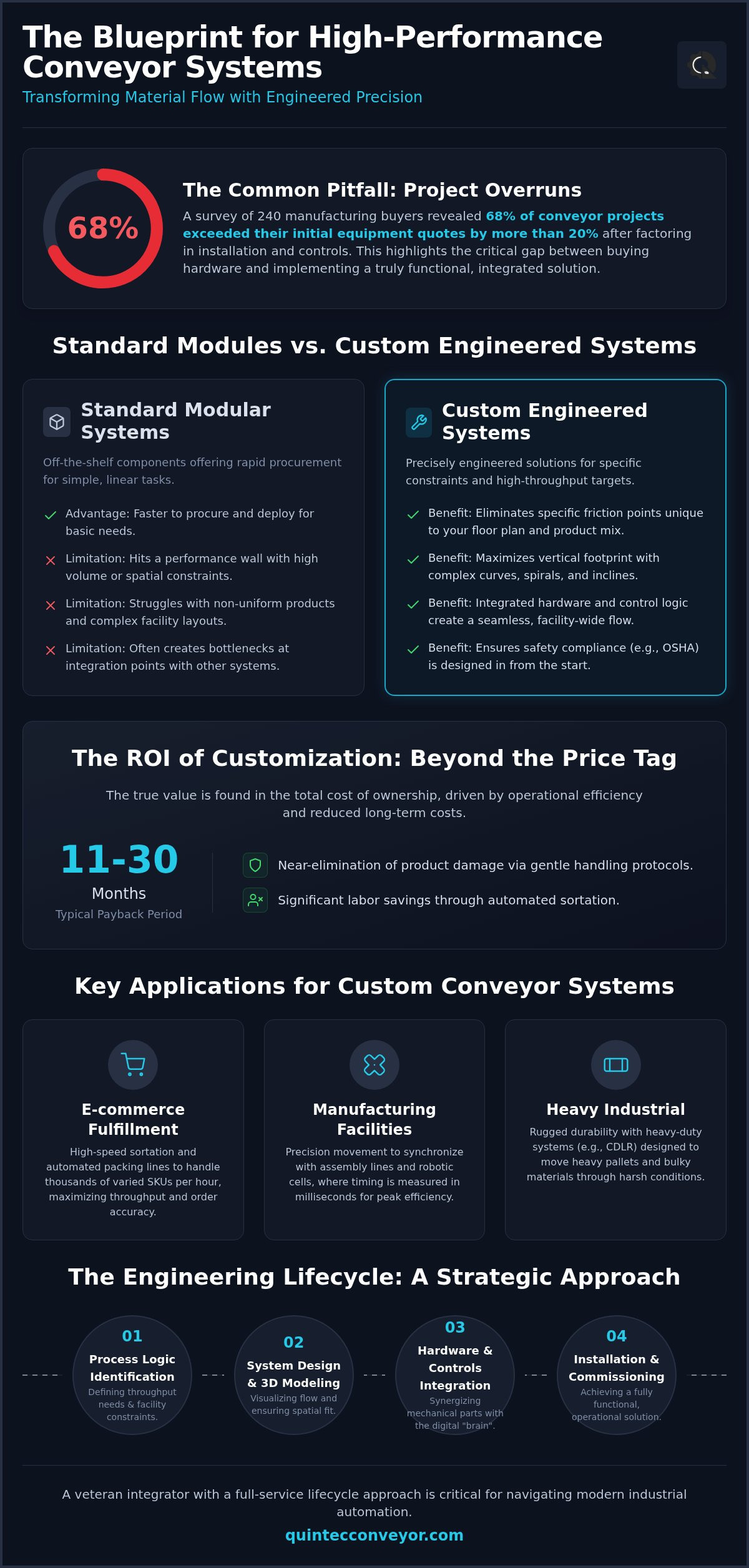
A recent survey of 240 manufacturing buyers revealed that 68% of conveyor projects exceeded their initial equipment quotes by more than 20% after factoring in installation and controls. This statistic highlights a common industry struggle: the gap between purchasing hardware and achieving a fully functional, integrated solution. You've likely felt the pressure of inefficient material flow causing bottlenecks that stall production, or perhaps you're grappling with the high costs of manual handling and downtime. It's frustrating when new technology refuses to communicate with legacy systems, leaving your facility short of its true potential.
We're here to change that trajectory. This guide demonstrates how to design, engineer, and implement high-performance custom conveyor systems that eliminate operational friction and maximize your facility's ROI. By prioritizing process engineering and seamless robotics integration, you can transform your infrastructure into a scalable asset. We'll explore the technical standards of 2026, from advanced sortation logic to automated racking; providing a roadmap for a seamless, automated facility flow that reduces labor costs and supports long-term growth.
Key Takeaways
- Understand the shift toward intelligent, data-driven sortation and how tailored engineering solves unique facility throughput constraints.
- Evaluate the cost-benefit ratio of custom conveyor systems to determine when engineered precision provides a superior ROI over standard modular hardware.
- Explore the essential synergy between mechanical hardware and the advanced control systems that manage complex facility flow.
- Learn the strategic phases of the engineering lifecycle, from initial process logic identification to comprehensive 3D modeling.
- Discover why a veteran integrator with a full-service lifecycle approach is critical for navigating the complexities of modern industrial automation.
What Defines a Custom Conveyor System in 2026?
In 2026, a custom conveyor system represents far more than a simple mechanical belt moving goods from point A to point B. It's a precisely engineered material handling solution designed to address specific facility constraints and aggressive throughput targets. While a standard conveyor system overview provides a baseline understanding of these tools, true customization involves a fundamental shift toward intelligent, data-driven movement via custom conveyor systems. High-volume industrial environments often find that off-the-shelf modules fail because they lack the structural durability for constant cycles or the specific dimensions required to maximize a facility's vertical footprint. Custom engineering allows operators to reclaim valuable floor area by utilizing overhead space and complex curves that standard equipment simply cannot navigate.
Custom Hardware vs. Integrated Systems
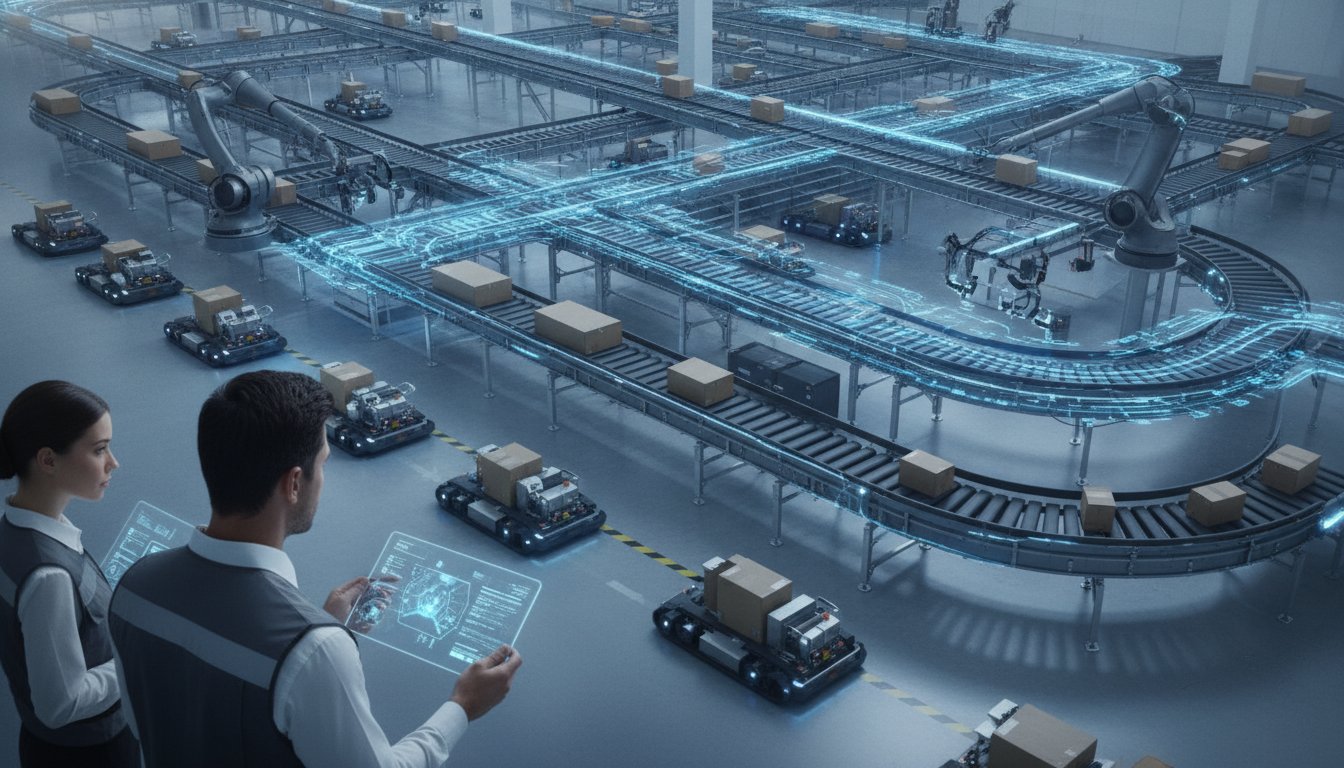
There's a significant distinction between a single bespoke belt and a fully integrated facility-wide system. Custom hardware might solve a specific incline challenge, but an integrated system acts as the operational bridge between storage, processing, and shipping zones. These custom conveyor systems often feature bespoke configurations, such as high-density spirals or complex declines, ensuring that material flow remains continuous without manual intervention. By integrating the physical hardware with sophisticated control logic, you create a digital "brain" that manages sortation and prevents the bottlenecks that typically plague mismatched setups. This holistic approach ensures that every motor, sensor, and belt works in concert to maintain peak efficiency.
Key Industry Applications for Customization
Different sectors demand distinct engineering priorities. In e-commerce fulfillment, the focus is on high-speed sortation and automated packing lines that can handle thousands of varied SKUs per hour. Manufacturing facilities require precision movement to sync with assembly lines and robotic cells where timing is measured in milliseconds. For heavy industrial operations, the priority shifts to rugged durability. These environments rely on heavy-duty Chain Driven Live Roller (CDLR) systems and modular conveyor systems designed to move heavy pallets and bulky materials through harsh conditions. In each case, the custom approach ensures the equipment adapts to the workflow, rather than forcing the workflow to adapt to the equipment. This adaptability is what defines modern industrial excellence.
Evaluating Custom vs. Standard Conveyor Solutions
Deciding between off-the-shelf modules and custom conveyor systems is a strategic choice that dictates a facility's long-term operational ceiling. Standard equipment offers the advantage of speed in procurement, but it often hits a performance wall when faced with high-volume sortation or unique spatial constraints. Custom solutions, while requiring a higher initial capital commitment, provide the precision required for the complex logistics of 2026. This isn't merely about moving products; it's about engineering a system that eliminates the specific friction points unique to your floor plan and product mix.
When to Invest in a Custom Engineered System
Standard conveyors struggle with products that aren't uniform cubes. If your facility handles fragile materials, non-standard dimensions, or requires specific incline angles, custom engineering becomes a necessity rather than an upgrade. Bottlenecks often appear at the points of transition between legacy hardware and new automation. By leveraging warehouse design services, you can map out these friction points before they impact your bottom line. Engineered systems also ensure full compliance with OSHA conveyor safety standards, integrating protective guarding and emergency stops into the design from the start rather than as an afterthought.
The ROI of Customization: Beyond the Price Tag
The true value of customization is found in the total cost of ownership. For labor-replacement projects, the typical payback period for a new conveyor system in 2026 falls between 11 and 30 months. This return is driven by more than just belt speed. It includes significant labor savings through automated sortation and the near-elimination of product damage via precision-engineered gentle handling protocols. It's also vital to account for installation costs, which typically add 12% to 25% to the total equipment price. While some vendors might provide a low equipment quote, a custom integrator factors in these variables to ensure the final throughput matches your financial projections.
Scalability is often where standard modules fail. If your volume grows or your product mix changes, a rigid system can become a liability. Custom conveyor systems are designed with future modularity in mind, using high-grade components that withstand 24/7 operation cycles. This durability reduces the maintenance burden, allowing your team to focus on production rather than constant repairs. If you're ready to move beyond basic transportation, our team can help you evaluate your facility flow to find the most efficient path forward for your infrastructure.
Core Components of Modern Custom Conveyor Solutions
Success in modern material handling depends on the synergy between physical hardware and the digital logic that orchestrates movement. While many vendors focus on selling individual belts or rollers, high-performance custom conveyor systems treat mechanical components as the body and automation logic as the brain. This "integration logic" is the primary differentiator in 2026. It ensures that every motor, sensor, and diverter communicates in real-time to maintain a constant, optimized flow. For essential operations, the reliability of conveyors in manufacturing relies on this seamless communication to prevent the micro-stoppages that erode facility ROI.
The mechanical foundation typically utilizes a mix of modular conveyor systems for flexibility and heavy-duty Chain Driven Live Roller (CDLR) hardware for pallet-level movement. However, the hardware only achieves its potential when paired with advanced robotic integration. By automating picking, packing, and palletizing, facilities can significantly reduce labor costs while increasing accuracy. These systems are no longer isolated islands of automation; they're fully integrated nodes within a total facility infrastructure that includes warehouse racking and mezzanine supports.
Advanced Sortation and Robotics
In high-volume facilities, the strategic use of cross-belt sorter systems allows for the rapid, accurate diversion of diverse product types at speeds that were once unattainable. In 2026, AI and machine learning have moved from experimental to essential, providing predictive maintenance alerts and real-time path optimization. The manufacturing sector currently accounts for an estimated 39% of the conveyor market share, driven by this need for high-speed precision. This intelligence also facilitates the integration of Autonomous Mobile Robots (AMRs) with fixed conveyor lines. Rather than replacing fixed infrastructure, AMRs complement custom conveyor systems by handling non-linear transport tasks, creating a hybrid flow that adapts to seasonal demand spikes without requiring permanent floor plan changes.
Structural Integrity and Warehouse Racking
True facility integration requires a deep understanding of vertical space and structural engineering. Custom conveyor builds must be designed in tandem with warehouse racking to ensure induction points are positioned for maximum ergonomic and mechanical efficiency. This synergy allows for the implementation of multi-tier mezzanines that effectively double or triple usable square footage. With the global conveyor system market projected to reach $11.60 billion in 2026, the demand for integrated racking and mezzanine solutions has never been higher. Beyond throughput, these structures must meet rigorous seismic and industrial safety compliance standards. Engineering for the modern era means building for durability, ensuring that the infrastructure supporting your automation is as resilient as the technology itself.
The Engineering Lifecycle: From Design to Installation
Executing a successful material handling project requires a methodical, step-by-step approach that transitions from abstract logic to physical reality. For custom conveyor systems, this lifecycle is divided into five distinct phases designed to ensure total project management and operational excellence. It begins with deep-dive process engineering to identify operational logic, followed by custom 3D modeling tailored to your specific facility dimensions. Once the design is finalized, the project moves into precision manufacturing and factory acceptance testing (FAT) to verify performance before shipment. The final stages involve national installation and a long-term commitment to proactive maintenance to prevent impending conveyor maintenance issues that could stall production during critical windows.
Process Engineering: The Foundation of Flow
Process Engineering is the logical mapping of material movement. This phase is critical because it moves beyond average daily flow to account for peak-season volume spikes that often cripple standard setups. By analyzing throughput data from the start, our engineers eliminate future bottlenecks before a single piece of hardware is manufactured. We focus on creating a system that doesn't just fit your current needs but scales with your 2026 growth projections. This proactive analysis ensures that the automation logic and sortation speeds align perfectly with your facility's specific operational trajectory.
Seamless National Installation Services
Large-scale integration projects often span multiple facility sites across the United States, requiring a high level of logistical coordination and seasoned authority. Our teams focus on minimizing operational downtime during system swap-outs or upgrades, ensuring that new custom conveyor systems are integrated without paralyzing your current output. We understand that every hour of downtime is lost revenue, so we utilize a structured installation roadmap to keep projects on schedule. A vital component of this phase is providing expert on-site training for your facility maintenance teams. This ensures they possess the technical insight to manage the new technology effectively, maintaining the high-level results promised during the design phase.
A successful installation is only the beginning of a long-term partnership. By combining veteran expertise with the latest in 3D modeling and factory testing, we ensure that your infrastructure is grounded in proven methods while being ready for future innovation. If you're planning a facility-wide upgrade or a new build, you can request a full-service engineering consultation to start your project lifecycle with a team that values precision and thoroughness at every stage.
Partnering with a Veteran Conveyor System Integrator
Selecting a conveyor system integrator over a simple equipment vendor is a strategic decision that defines the long-term success of your facility. While a vendor focuses on the sale of individual components, an integrator takes responsibility for the entire project lifecycle, from initial process engineering to final national installation. This holistic approach is essential when implementing custom conveyor systems that must synchronize with robotics, warehouse racking, and complex automation logic. By partnering with a single-source provider, you eliminate the friction of managing multiple contractors and ensure that every element of your infrastructure is engineered for total harmony.
We leverage over 100 years of collective industry experience to guide clients through the complexities of large-scale logistical builds. This deep well of practical knowledge allows us to act as a steady hand, ensuring that your facility flow is optimized for the demands of 2026 and beyond. Future-proofing your operation requires more than just modern hardware; it requires scalable industrial conveyor systems that can adapt as your throughput requirements grow and your product mix evolves.
Why Experience Matters in Custom Integration
The pitfalls of working with inexperienced vendors often manifest as costly design errors in sortation logic or structural misalignments that only appear during the installation phase. Veteran engineering prevents these issues by identifying potential bottlenecks during the 3D modeling stage. Our commitment to professional excellence means we don't just deliver equipment; we deliver a proactive solution grounded in proven methods. This reliability provides a sense of security, knowing that your complex material handling challenges are being managed by experts who value precision and high-level results.
Next Steps: Designing Your Custom Solution
Preparation is the foundation of a successful facility audit. Before your initial consultation, we recommend gathering specific facility data, including peak-season throughput targets, varied product dimensions, and existing floor plan constraints. This information allows our team to generate a comprehensive ROI projection tailored to your unique operational goals. Whether you're looking to reduce labor costs through robotics or expand your vertical storage with integrated mezzanines, the first step is a thorough system analysis. You can contact our team today to request a national-scale project quote and begin the process of transforming your facility into a seamless, automated environment.
Building a Future-Ready Industrial Infrastructure
Success in 2026 logistics requires moving beyond standard hardware to embrace a sophisticated understanding of integration logic. By prioritizing custom conveyor systems, you ensure your infrastructure isn't just meeting today's throughput but is resilient enough to scale with future growth. We've established that the true value of an engineered system lies in the precision of its design and the reliability of its components. This strategic approach eliminates the bottlenecks that stall production and erodes facility ROI.
Quintec brings over 100 years of collective industry experience to every project, offering expert process engineering and national scale integration. Our team acts as a strategic guide, helping you navigate complex logistical challenges with the quiet confidence of an industry leader. It's time to transform your facility into a seamless, automated environment that values long-term stability and modern excellence. Design your custom conveyor solution with Quintec's expert engineering team today. We look forward to partnering with you to achieve a truly optimized facility flow.
Frequently Asked Questions
What is the difference between a custom conveyor and a modular system?
A custom conveyor is engineered from the ground up to solve unique facility constraints or non-standard product handling needs. In contrast, modular systems utilize pre-engineered sections that offer quick installation and flexibility for future reconfigurations. While modular units are effective for standard logistics, custom conveyor systems provide the precise dimensions and structural durability required for high-volume, complex industrial environments where off-the-shelf solutions hit a performance ceiling.
How long does a custom conveyor system integration project typically take?
The timeline for a custom integration project varies based on the scope of the process engineering and the complexity of the automation logic. A typical project lifecycle, from initial design and 3D modeling to national installation, can range from four to twelve months. Larger facility-wide upgrades involving robotics and automated racking often require extensive factory acceptance testing (FAT) to ensure the system meets throughput targets before it goes live on-site.
Can custom conveyor systems be integrated with existing warehouse automation?
Yes, expert integrators specialize in bridging the gap between legacy hardware and modern automation. This process involves sophisticated control systems that act as the digital brain, allowing new custom conveyor systems to communicate seamlessly with existing WMS or ERP platforms. By utilizing advanced process engineering, we ensure that new induction points and sortation logic align with your current facility flow, preventing the bottlenecks that often occur when mismatched technologies are forced to interact.
What industries benefit most from custom engineered conveyor solutions?
High-volume sectors like e-commerce fulfillment, automotive manufacturing, and heavy industrial logistics benefit most from engineered solutions. E-commerce relies on high-speed sortation to manage thousands of varied SKUs, while manufacturing requires precision timing to sync with robotic assembly cells. Additionally, industries handling bulky or fragile materials use custom configurations, such as specialized declines or heavy-duty CDLR rollers, to maintain 100% throughput reliability where standard modules would fail.
How do I calculate the ROI for a custom material handling system?
To calculate ROI, you must look beyond the initial equipment quote and factor in the total cost of ownership. This includes labor savings from automated sortation, a reduction in product damage through gentle handling, and increased throughput capacity. For many labor-replacement projects in 2026, the payback period falls between 11 and 30 months. It's also important to account for installation costs, which typically range from 12% to 25% of the total equipment price.
What maintenance is required for high-speed automated conveyor systems?
High-speed systems require a rigorous, proactive maintenance schedule to prevent unplanned downtime. Key tasks include regular lubrication of moving parts, calibration of sortation sensors, and monitoring of belt tension and tracking. We emphasize a full-service lifecycle approach, focusing on identifying early warning signs like unusual vibrations or heat signatures. Consistent maintenance ensures that your mechanical hardware and control systems continue to operate at peak efficiency throughout their intended lifespan.
How does robotics integration work within a custom conveyor setup?
Robotics integration involves positioning automated arms or AMRs at strategic nodes within the conveyor line to handle picking, packing, or palletizing tasks. These robotic cells are synchronized with the conveyor's automation logic, ensuring that product flow is metered precisely for the robot's cycle time. This synergy allows for high-density operations that reduce the need for manual handling, creating a seamless facility flow that is both scalable and highly accurate.
Does Quintec provide national installation and maintenance services?
Quintec provides comprehensive national installation and professional maintenance services across the United States. Our team handles the entire project lifecycle, ensuring that your integrated system is installed correctly and maintained for long-term reliability. While we don't offer 24/7 emergency repairs, our proactive maintenance programs are designed to identify and resolve potential issues before they lead to significant downtime. We focus on being a long-term partner for your facility's infrastructure needs.