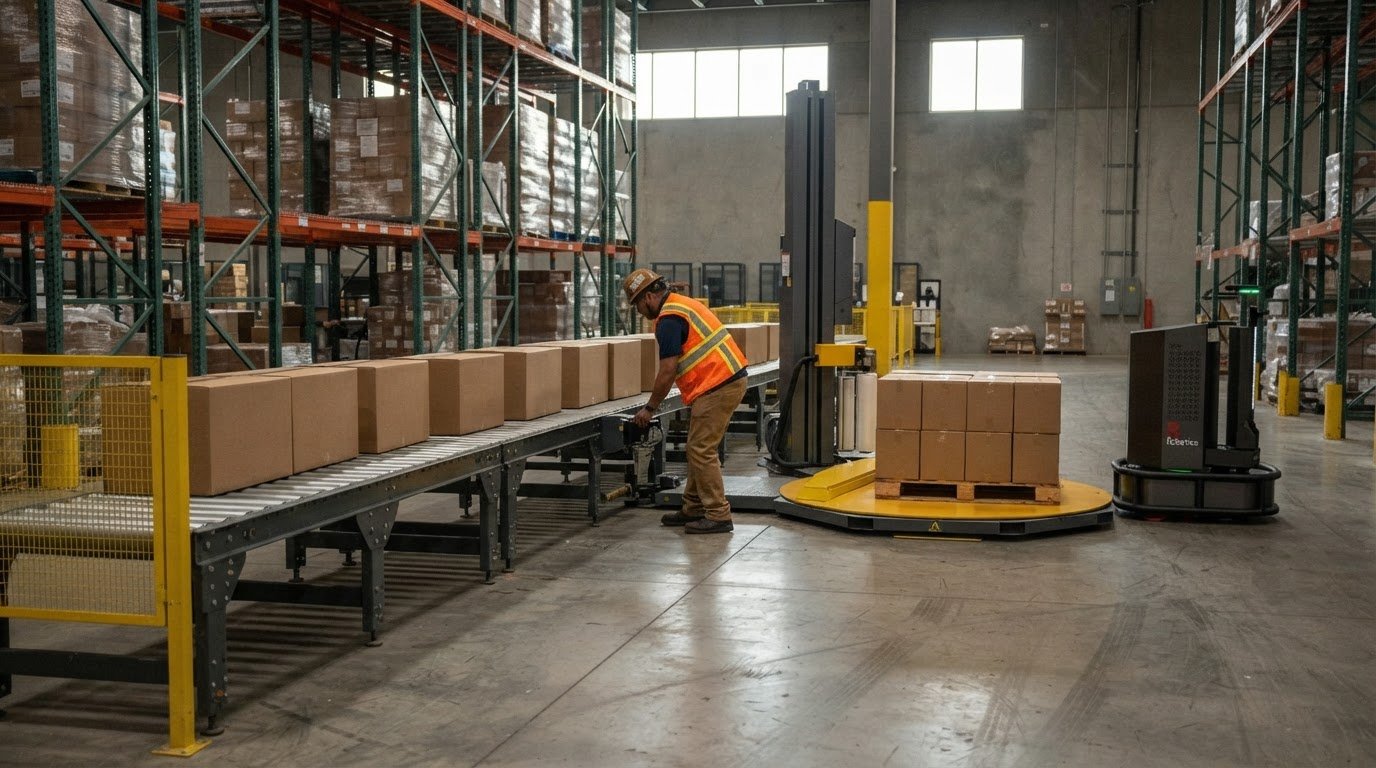
A material handling system works best when equipment and installation are planned as one coordinated project. Quintec Integration provides material handling integration, including system installation, commissioning, and testing.
Choosing an integrator involves more than selecting equipment. Project scope, engineering support, and the systems a facility needs all help determine the right fit.
This overview explains Quintec Integration’s material handling capabilities and the factors businesses may consider when planning a project. It covers how conveyors, robotics and automation, infrastructure, and process engineering can support facility needs, and where Quintec Conveyors fits.
Key Takeaways
- Assess an integrator by the project scope it can coordinate, from system design through installation, commissioning, and testing.
- Match conveyor and automation choices to your facility’s material flow, operational requirements, and existing infrastructure.
- Compare alternatives by the capabilities they bring to the project, including engineering support, equipment integration, and ongoing system needs.
- For an industrial integration project, consider how Quintec Conveyors’ conveyors, robotics and automation, infrastructure, and additional material handling equipment align with your facility’s goals.
Quintec Integration
Quintec Integration, Inc. is a material handling systems integrator incorporated in 1999. It is headquartered in Waukesha, Wisconsin, and its primary location is listed at 1600 Paramount Drive. The company describes its work across the connected stages of a material handling project, rather than as equipment supply alone. Its stated capabilities include drafting, project management, field engineering, procurement, installation, commissioning, testing, and maintenance. That scope can matter when a facility needs several project functions coordinated under one integration plan.
Projects begin with defining requirements and designing the system. Layout and process engineering translate material flow and operating needs into plans. Project management coordinates the work, while procurement supports the acquisition of equipment and components. Each function addresses part of the same challenge: for example, a conveyor layout must suit the facility and connect with the intended process. The project plan must also coordinate equipment, installation, and commissioning.
Field engineering covers mechanical and electrical installation. That distinction matters because material handling systems can involve physical equipment, electrical connections, and controls. Coordinating these elements helps bring the system together at the installation site. Quintec Integration also provides system commissioning and testing, helping assess the integrated system against project requirements after installation.
The company’s stated installation, commissioning, and testing work addresses ergonomics, safety, and OSHA requirements. This indicates that those considerations are part of the integration scope, alongside equipment and engineering. Their practical relevance depends on the project’s design and work environment. For instance, ergonomic considerations relate to how people interact with material handling equipment. Safety and applicable requirements must also be considered during planning and implementation, not treated as unrelated details after installation.
Service scope and project fit
Conveyor work is another part of the company’s listed specialties. Quintec Integration identifies conveyor repair and conveyor service, alongside its broader project capabilities. This combination may suit operations evaluating a new system as well as facilities addressing existing conveyor needs. A project’s scope can therefore range from planning and installation to maintenance. The appropriate work depends on the operational issue, the equipment involved, and the facility’s intended outcome.
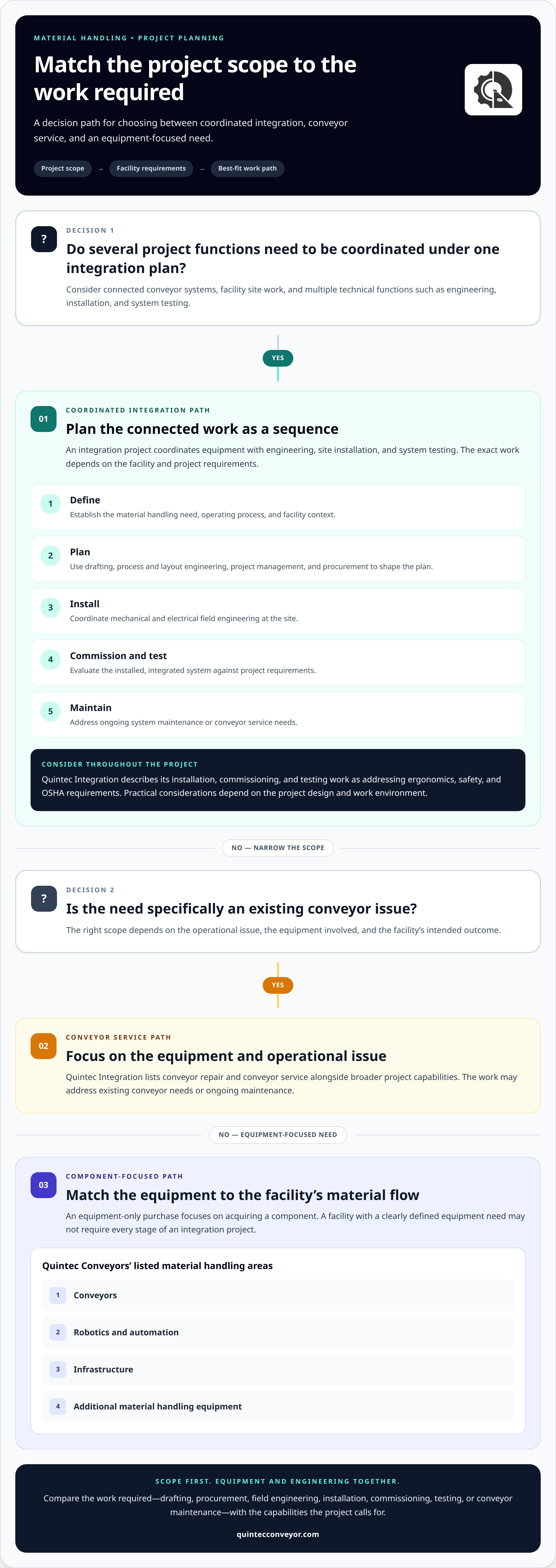
A new integration project can be understood as a set of coordinated stages:
- Define: Establish the material handling need, operating process, and facility context.
- Plan: Develop drafts, coordinate project management, and arrange procurement.
- Install: Apply mechanical and electrical field engineering to the site work.
- Commission and test: Evaluate the installed system as part of project completion.
- Maintain: Address ongoing conveyor service or maintenance needs.
This sequence illustrates the integrator model. An equipment-only purchase focuses on acquiring a component; an integration project coordinates equipment with engineering, site installation, and system testing. A facility with a clearly defined equipment need may not require every stage. A project involving connected conveyor systems, site work, and several technical functions may benefit from coordinated integration. The distinction is project scope, not a universal ranking of providers.
Quintec Integration’s location and company details offer identification context, not a measure of project suitability. The company’s listed size is 11-50 employees, and its headquarters are in Waukesha. Those facts do not describe the staffing or timeline for a particular project. For a useful comparison, focus on the work required: drafting, procurement, mechanical or electrical field engineering, installation, commissioning, testing, or conveyor maintenance. Matching those requirements to the stated scope makes the alternative assessment more practical.
Quintec Conveyors
Quintec Conveyors helps businesses consider how material handling equipment and systems can fit their operational needs. Its offerings include conveyors, robotics and automation, infrastructure, and additional material handling equipment. These capabilities are relevant when a project involves more than one piece of equipment, such as coordinating systems with facility infrastructure or planning how automation fits the material flow.
Start by defining the operational challenge: what needs to move, where the process encounters constraints, and what the facility must support. This context helps shape a project around practical requirements rather than a standalone equipment choice. Businesses considering integration can discuss these needs with Quintec Conveyors as part of its material handling work.
Contact Quintec Conveyors to discuss your material handling project.
Plan the Next Move for Your Facility
The most useful comparison starts with your facility’s next operational priority. Define the process, equipment, and surrounding infrastructure the system must support. This helps you assess whether an integrator’s capabilities align with the project, rather than relying on a name alone. Comparing Quintec Integration’s capabilities with your requirements can clarify which factors matter most to your decision.
Quintec Conveyors provides conveyors, robotics and automation, and infrastructure for material handling projects. Consider these areas together as you plan around facility needs and future operations. Identify the challenge your team wants to address, then contact Quintec to discuss how the relevant equipment and infrastructure can fit.
Contact Quintec Conveyors to discuss your project and identify a practical path forward.

Article by
Jon Huang