Conveyor System Repair and Service for Urgent Breakdowns
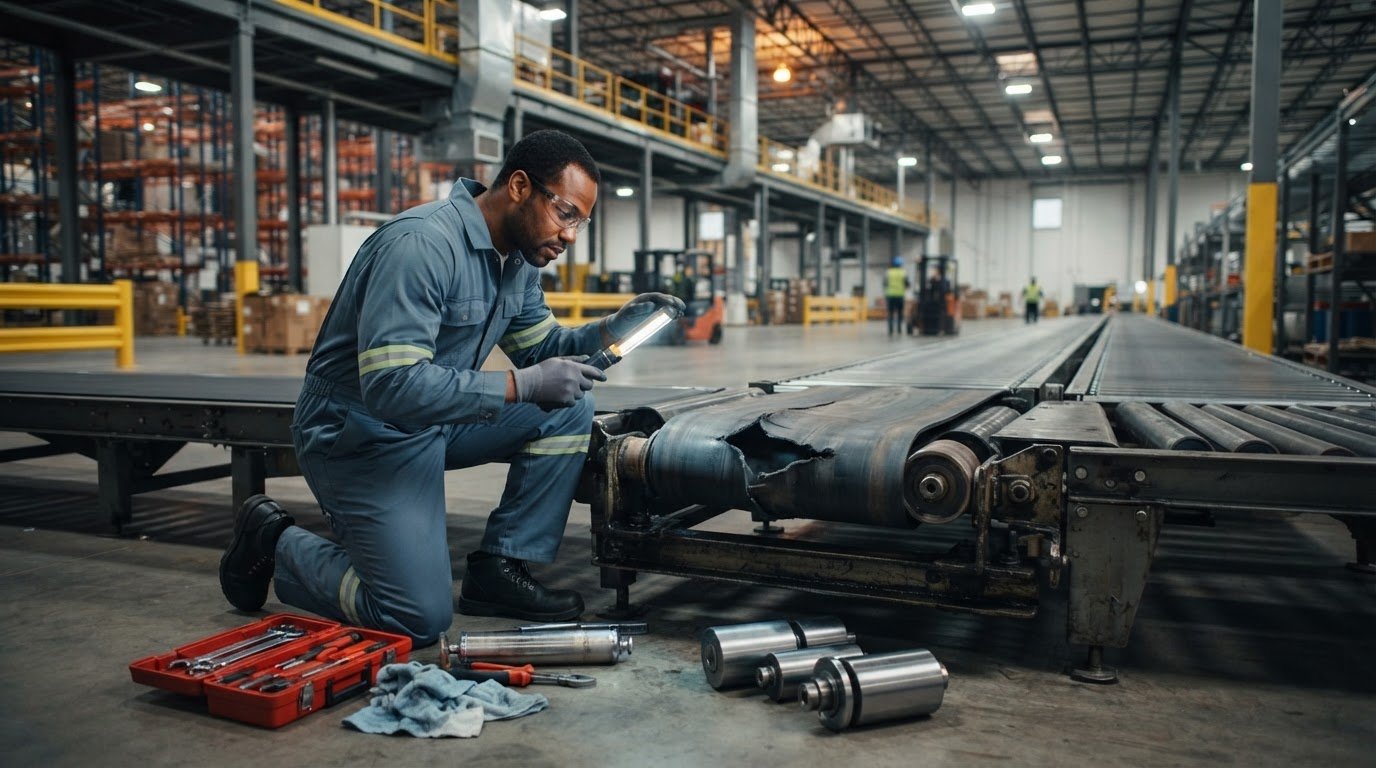
A conveyor breakdown is best addressed by locating the fault, repairing or replacing the affected component, and checking system operation before returning it to service. Conveyor system repair and service can involve belt, roller, motor, gearbox, electrical, or alignment issues. The right response depends on the symptoms and equipment condition.
A stoppage can disrupt work across a facility, so it helps to have a clear path from problem to repair. Start with a focused inspection: identify what has failed, determine whether related components are affected, and prioritize the work needed to restore operation.
This article covers common conveyor problems, what inspections involve, how urgent repairs and spare parts fit into the process, and what shapes the repair approach. It also explains how routine maintenance can help identify developing issues before they cause larger interruptions.
Key Takeaways
- Recognize warning signs such as belt tears, seam damage, misalignment, buildup, or recurring spillage before they escalate.
- Use a structured inspection to assess sensors, photo eyes, electrical and mechanical components, and the condition of the conveyor frame.
- Understand how urgency, the fault, and the repair required shape the response to a breakdown.
- Identify the failed part and its system requirements to guide spare-parts selection and support an effective repair.
Common belt, roller, motor, gearbox, electrical, and alignment problems
Conveyor faults can begin in the belt path, drive train, or control system. Matching symptoms to affected components helps focus the inspection and repair.
Belt, roller, motor, gearbox, and electrical faults
Belt tears and seam rips can interrupt material movement, while worn or seized rollers can cause uneven travel. A crooked frame, pulley buildup, or belt drift may indicate alignment problems. Motor or gearbox noise, heat, vibration, or inconsistent movement can signal drive-related faults. Electrical issues may show up as intermittent starts, stops, or sensor responses.
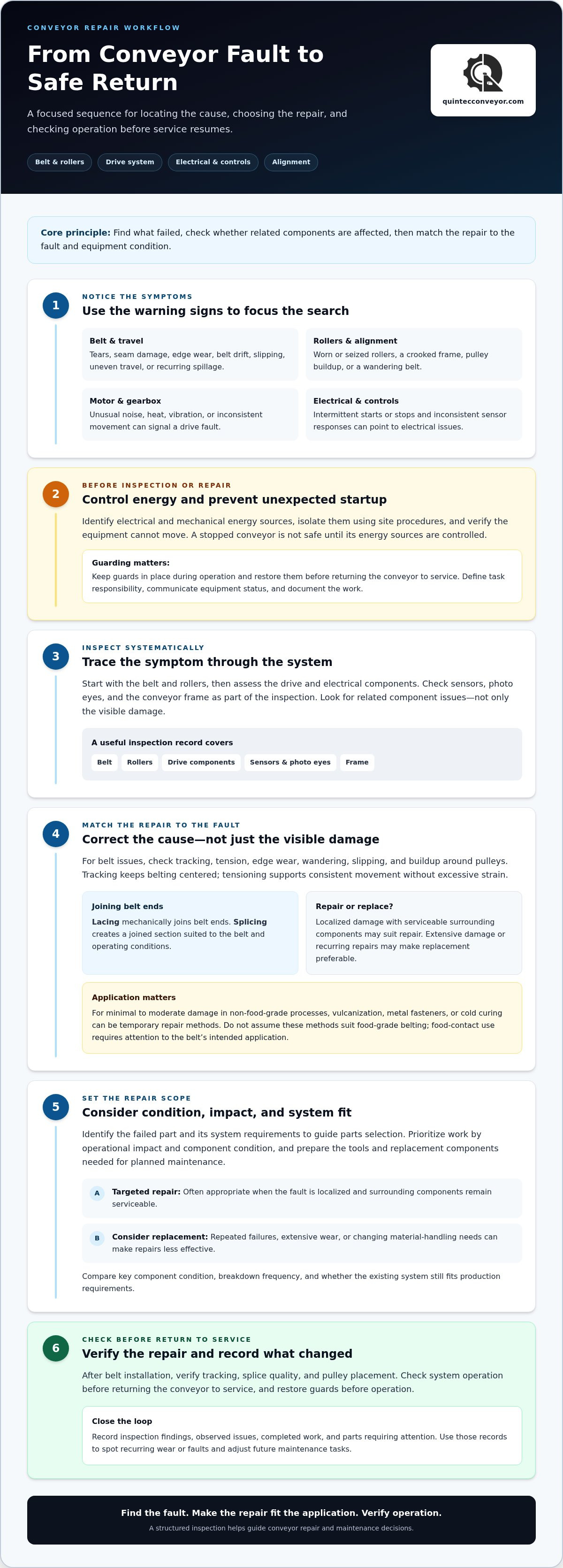
Trace the symptom through the system: inspect the belt and rollers, then assess the drive and electrical components. Conveyor system repair and service should address the underlying cause, not just visible damage.
Belt tracking, tensioning, splicing, and replacement
Tracking keeps conveyor belting centered, while tensioning helps maintain consistent movement without excessive strain. Check for edge wear, wandering, slipping, and buildup around pulleys. Lacing mechanically joins belt ends, while splicing creates a joined section suited to the belt and operating conditions. The right method depends on the damage, belt construction, and application.
For minimal to moderate belt damage in non-food-grade processes, vulcanization, metal fasteners, or cold curing can serve as temporary repair methods. Replacement may be preferable when damage is extensive or repairs keep recurring. After installation, verify belt tracking, splice quality, and pulley placement for the line.
Food processing and manufacturing lines have different application demands. Food-contact use requires attention to the belt’s intended application. Temporary repair methods described for non-food-grade processes should not be assumed suitable for food-grade belting. For manufacturing material handling, consider load, movement, and operating conditions when selecting repair or replacement.
Choose a qualified conveyor repair company by looking for a systematic assessment of the belt, drive, electrical components, alignment, and application. A sound repair plan identifies the fault, explains the repair method, and includes checks of tracking and operation after installation.
In the United States, repair pricing depends on the fault, labor, access, and replacement parts. Request a quote to establish the price.
Inspection and maintenance of conveyor components
A planned inspection checks wear, alignment, controls, and operating condition across the conveyor. Regular maintenance helps identify developing faults before they interrupt manufacturing or damage other components.
Customized preventive maintenance schedules
Build a schedule around the conveyor’s material, operating conditions, and maintenance history. For example, a line handling abrasive material needs attention to belt wear and buildup, while a system with frequent sensor interruptions needs focused electrical checks. Technicians can record each inspection’s findings and adjust tasks when recurring wear or faults appear.
Include the conveyor belt, rollers, drive components, sensors, photo eyes, and frame in the inspection plan. A checklist makes it easier to compare conditions across visits and spot changes during operation.
Preventive maintenance programs and plans
A preventive maintenance program turns inspections into assigned tasks, records, and follow-up repairs. A conveyor maintenance and repair plan can document component condition, observed issues, completed work, and parts requiring attention. For instance, recurring spillage can prompt checks of belt alignment, loading points, and buildup instead of repeated cleanup alone.
Use inspection records to prioritize work by operational impact and component condition. Clear documentation also helps technicians prepare the right tools and replacement components before planned maintenance.
Repair or replacement decisions
Repair is often appropriate when a localized fault can be corrected and surrounding components remain serviceable. Consider system replacement when repeated failures, extensive wear, or changing material-handling needs make repairs less effective. Compare the condition of key components, breakdown frequency, and whether the existing system still fits production requirements.
Involve technicians in assessing the conveyor’s mechanical and electrical condition. Their findings provide a practical basis for choosing targeted repairs, broader refurbishment, or replacement.
Safety rules for repair and maintenance
In the United States, maintenance work should follow applicable workplace procedures for controlling energy and preventing unexpected startup. Before inspection or repair, identify electrical and mechanical energy sources, isolate them using site procedures, and verify that the equipment cannot move. Keep guards in place during operation and restore them before returning the conveyor to service.
Define who can perform each task, communicate the equipment’s status, and document the work. Review relevant training and certification records when assigning specialized electrical or mechanical work. Never treat a stopped conveyor as safe until its energy sources are controlled.
24/7 Emergency service availability
A conveyor emergency needs a defined response plan, not just a phone number. Availability, fault details, site access, and parts readiness affect how quickly a repair can proceed.
“24/7” means support is available throughout the day and night, including outside standard business hours. It doesn’t automatically mean a technician is already at the facility or every repair can begin immediately. Clarify what the service covers: call handling, remote troubleshooting, dispatch, on-site work, and follow-up. These are distinct steps, and each affects the response.
During downtime, record the conveyor’s symptoms before reporting the fault. Note which section stopped, whether the system restarts, any alarms or unusual sounds, and what material was moving. Share the equipment location, access requirements, and any recent maintenance findings. Clear details help responders assess the issue and prepare for the right work.
At the facility, prioritize safe access and a concise handoff. Identify the affected line, explain how the breakdown impacts operations, and describe any temporary changes already made. Keep personnel clear of equipment that could start unexpectedly, and follow site procedures before inspection or repair.
Emergency repair response can depend on fault complexity, technician availability, travel distance, site access, and required parts. A belt issue may need a different response from a failed drive or control component. Maintenance plans can reduce delays by documenting equipment details, known faults, and relevant replacement parts in advance.
Repair pricing depends on the fault, labor, access, travel, and required parts. Request a quote to establish the price. These factors shape the work scope, especially if diagnosis reveals additional damage.
For stronger operational readiness, define in advance who reports emergencies, who authorizes work, and how affected areas are accessed. Review the plan after each incident. Recording response steps and repair findings can improve future coordination and customer satisfaction. Treat round-the-clock coverage as a specific service arrangement, not an assumption based solely on the word “emergency.”
Spare parts
The right replacement part depends on the conveyor’s design, operating conditions, and connection points. Accurate equipment details help match components and plan repairs without avoidable delays.
Parts availability and inventory
Start a parts inventory plan with components that could stop production if they fail. Record belt dimensions, roller type, chain specifications, bearing details, and motor or gearbox identifiers from equipment records. For conveyor chain, compare the required series, such as DIN, ANSI, or ISO, with the system specifications.
Review usage and maintenance records to identify components that repeatedly need replacement. Keep an organized parts list with manufacturer references, quantities, and storage locations. This helps maintenance teams distinguish compatible items from parts that only look similar.
Parts delivery and service truck stock
Delivery timing depends on the part, its source, shipping route, and whether it requires a specific configuration. A standard roller and a made-to-match belt can involve different sourcing steps. Provide accurate specifications and equipment details to reduce mismatches and support efficient ordering.
Service truck stock varies by technician and repair scope, so don’t assume a needed component will be on board. Before dispatch, share the conveyor model, affected assembly, and known part identifiers. For example, confirming a roller’s dimensions or a drive component’s identification can help determine whether truck stock is suitable or separate delivery is needed.
Connect spare-parts planning with production priorities. A facility may prioritize a critical drive component over a nonessential accessory because their failure affects material handling differently. Balance inventory needs against storage conditions, compatibility, and the consequences of a part being unavailable. For belt replacement, retain the belt’s construction and application requirements so the substitute matches its intended use.
Parts readiness supports reliability, but inventory alone won’t resolve recurring mechanical failures. Pair replacement records with inspection findings to identify repeated wear and improve maintenance planning. This helps teams optimize stock decisions while keeping part selection tied to equipment needs.
Discuss conveyor parts planning to connect replacement needs with system requirements.
Quintec Conveyors: Conveyors
Quintec Conveyors is a natural next step when recurring equipment problems point to broader system needs. Its conveyor design, engineering, and installation services support industrial facilities planning a new system or evaluating how existing material handling fits operational requirements.
Consider reaching out when repair findings show that the current layout or equipment no longer aligns with production demands. Quintec Conveyors also provides Robotics & Automation, Infrastructure, and Additional Material Handling Equipment, connecting conveyor needs with wider facility planning. These capabilities fit projects involving system integration or changes to material flow, rather than a single isolated component replacement.
Share the operational challenge, the affected process, and the outcome your facility needs. That context can help frame the next conversation around an appropriate conveyor or material handling project. Contact Quintec Conveyors to discuss your facility’s requirements.
Build a More Resilient Conveyor Operation
Use the next planning cycle to clarify operational priorities. Consider where material flow depends on a single conveyor, how system changes affect connected processes, and which improvements could support future production needs. This broader view connects urgent fixes with long-term facility planning.
Quintec Conveyors offers Conveyors, Robotics & Automation, and Infrastructure for industrial applications. These capabilities are relevant when an equipment issue points beyond an isolated repair toward system integration or facility changes. A coordinated approach to conveyor system repair and service starts with defining the operational challenge and the outcome your facility needs.
Share your requirements and discuss a practical path forward with Quintec Conveyors. A considered next step can help your team plan with greater clarity and confidence.
Frequently Asked Questions
What conveyor system repair and maintenance services are available?
Services commonly include conveyor maintenance, component repair, system upgrades, and conveyor design or installation. Quintec Conveyors offers conveyor maintenance and conveyors, alongside Robotics & Automation and Infrastructure. For example, a facility addressing a recurring material-flow bottleneck may need to assess the wider system layout, not just the affected component. The right work depends on the equipment and operational objective.
How do you troubleshoot common conveyor system problems?
Start by documenting what changed, when it happened, and which process was affected. Compare the conveyor’s behavior with normal operation, review control-panel alarms or available event logs, and note whether the issue occurs under a particular load or operating condition. For example, a fault that appears only during product accumulation may have a different cause from one present during an empty run.
What are the steps to repair a conveyor belt or roller conveyor?
First identify the damaged area or failed roller and determine whether nearby components were affected. Then select a repair or replacement method suited to the belt construction, roller assembly, and application. After completing the work, assess alignment and run an operational check before resuming normal production. Repair personnel should follow site procedures. Quintec places employee safety first and follows all OSHA requirements and regulations.
How often should conveyor systems be inspected and maintained?
Set inspection intervals according to operating hours, material handled, environment, and maintenance history. A system carrying abrasive material or operating in a dusty area needs different inspection priorities from lightly used equipment in a clean setting. Review findings after each inspection and adjust the plan when wear or recurring faults appear. Manufacturer guidance and facility maintenance records can help establish an appropriate schedule.
What are the signs a conveyor needs immediate repair?
Prioritize assessment when a new fault repeatedly interrupts production, damage is visibly spreading, or conveyor performance changes enough to disrupt the process. Record when the change occurs, what material is moving, and whether it affects one section or the whole line. This information helps distinguish an isolated issue from a developing system problem and supports a focused repair decision.
Are emergency or 24/7 conveyor repair services available near me?
Round-the-clock emergency repair is not a universal service; availability depends on the provider’s coverage and service arrangement. For an urgent interruption, follow the facility’s response plan and use maintenance records to document the issue and affected equipment. Quintec Conveyors provides conveyor maintenance for industrial systems, supporting planned equipment care and broader operational maintenance needs.