Conveyor System Integrators: How They Connect Equipment, Engineering, and Operations
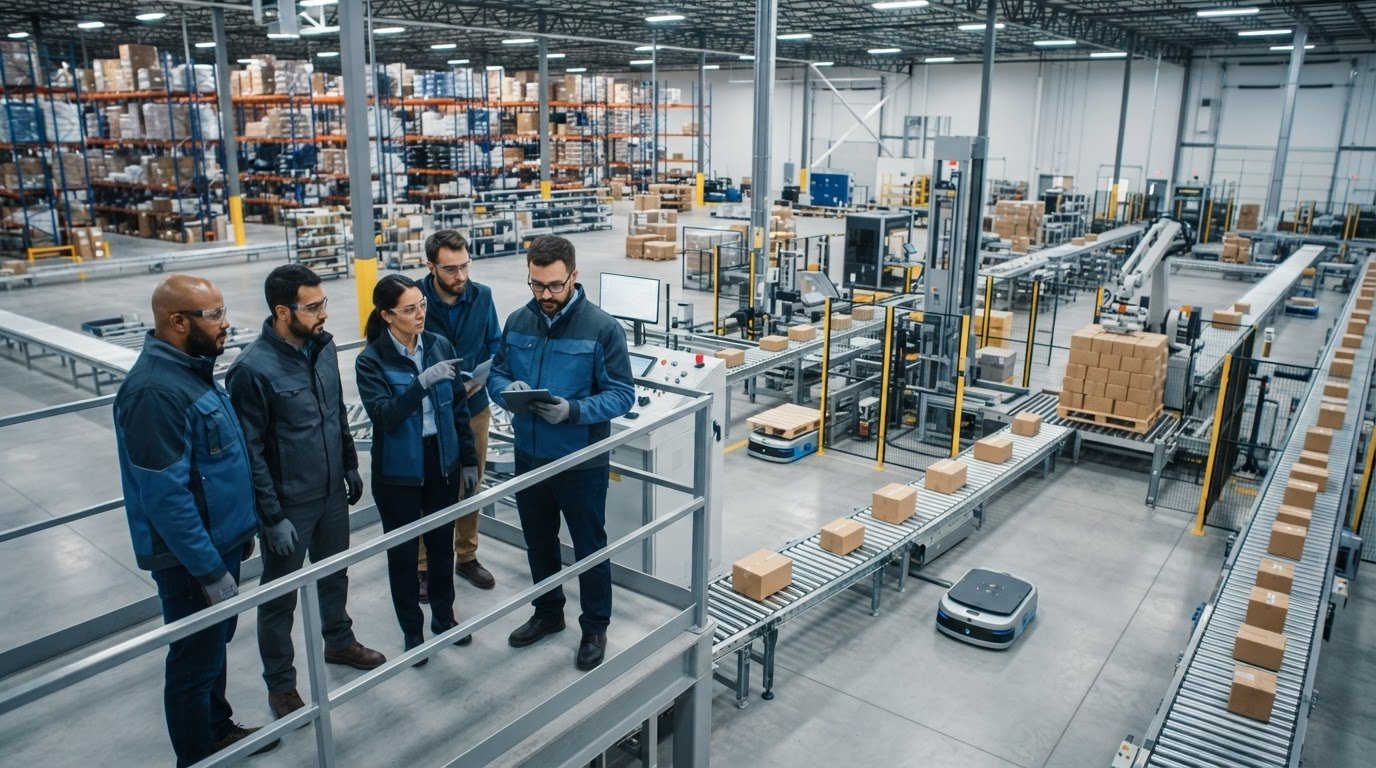
A warehouse bottleneck may not come from one machine. It can arise where conveyors, controls, robotics, and work processes meet. Conveyor system integrators address these connections by planning how equipment and operational requirements work together as a material handling system, rather than treating each component as a separate purchase.
Bringing several technologies together can seem complex, especially when daily operations need to continue during a project. A practical integration plan starts with the process: what needs to move, where work slows down, and how people and equipment interact. Those requirements guide engineering, system design, and implementation planning.
This article explains what an integrator does, from process engineering and system design through construction, installation, training, and ongoing maintenance. It also covers the operational details to prepare and how conveyors, AGVs, robotics, and controls can fit into a coordinated system. The result is a clearer way to move from identifying bottlenecks to planning a material handling solution around the facility’s needs.
Key Takeaways
- Learn how conveyor system integrators coordinate equipment and engineering into a material handling project instead of treating each purchase separately.
- Follow the project path from operational review and process engineering through design, installation, end-user training, and maintenance.
- Prepare for project planning by documenting workflows, material movement, facility constraints, objectives, bottlenecks, and handoffs.
- A coordinated project scope clarifies how conveyors, AGVs, robotics, and controls fit together and helps organize implementation responsibilities.
- Quintec brings together engineering, design, construction, installation, and maintenance, backed by OVER 100 YEARS OF EXPERIENCE!, 500+ PROJECTS, 500+ CLIENTS, and 30 STAFF.
What Conveyor System Integrators Do Beyond Supplying Equipment
A conveyor purchase addresses a piece of equipment. Integration addresses how materials move through an operation, from receiving or storage to the next process or shipping. Conveyor system integrators connect facility requirements with equipment selection, process engineering, system design, and controls to plan a coordinated material handling system.
A conveyor system integrator turns operational requirements into a coordinated system by aligning equipment, engineering, and facility processes.
This distinction matters because a conveyor’s role depends on what happens before and after it. Product types, movement paths, work sequences, available floor space, and automation objectives all influence the system concept. Start by understanding What is Material Handling?, then consider how equipment could support the facility’s specific movement and storage needs.
How an integrator connects equipment and facility processes
In a warehouse, a conveyor may link picking, packing, and shipping areas. Its design needs to account for the handoffs between those areas, not just the conveyor route. Process engineering examines how work currently flows and uses those observations to inform layout, equipment placement, and system requirements. The goal is to plan around the operation, rather than simply fit equipment into available floor space.
Controls engineering is another part of coordinating automated equipment. Planning should account for how conveyor sections relate to other system elements, such as robotics or automated guided vehicles (AGVs), and how each supports the workflow. This helps define what each part of the system is expected to do and how the parts connect.
When a warehouse may need systems integration
An integrated approach is useful when a challenge spans multiple work areas or equipment types. A manual handoff between process steps, for example, may create a queue. Disconnected workflows can also make it difficult to see how a delay in one area affects the next. In these cases, examine the connected process before choosing an equipment solution.
A request to replace or add a standalone conveyor may have a narrower scope if it does not affect adjacent processes, controls, or automation. The key question is whether the need is limited to one piece of equipment or involves coordinating material movement across the facility.
- Look for repeated handoffs: Record where people transfer products between process steps or equipment.
- Trace bottlenecks: Note where work waits and which upstream or downstream activities are connected.
- Define the scope: Distinguish a single-equipment need from a broader project involving layout, workflows, and automation objectives.
Documenting these connections gives engineering discussions a practical starting point. The system concept can then reflect how the facility operates instead of treating conveyor equipment as an isolated solution.
How Conveyor System Integrators Take a Project from Concept to Operation
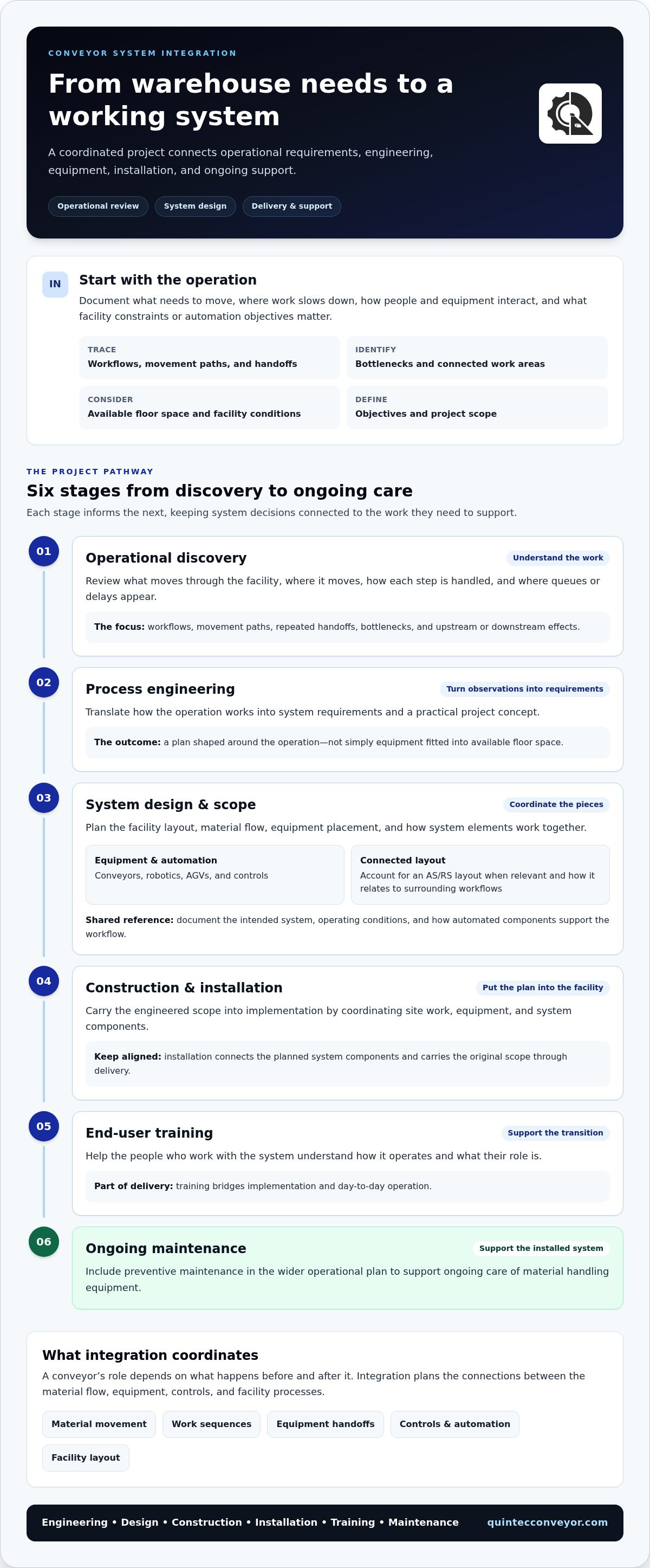
A coordinated project moves through a sequence of decisions, from understanding the operation to supporting the installed system. The project scope connects operational needs with equipment, controls, and implementation planning, helping stakeholders understand what the project includes and how its stages relate.
Integration takes a system from operational discovery through process engineering, design, installation, end-user training, and ongoing maintenance.
Each stage informs the next. A clear scope records the intended material flow, facility considerations, and automation objectives. This keeps engineering decisions connected to the work the system is meant to support. For broader industry context, the Material Handling Industry (MHI) covers technologies and practices shaping material handling and supply chains.
From process engineering to system design
Discovery starts with the operation: what moves, where it moves, and how work is handled at each step. Process engineering translates those details into requirements and a project concept. Design then considers the facility layout, material flow, and how conveyors, robotics, AGVs, and controls may fit together. When relevant, planning can also account for an AS/RS layout and how it relates to surrounding workflows.
A useful scope describes the intended system and the conditions it needs to accommodate. It connects the operational objective to the layout and equipment plan, while identifying how automated components fit into the concept. This gives project stakeholders a shared reference as planning progresses.
Installation, training, and ongoing support
Installation puts engineered plans into the facility and connects the system components. Coordinating equipment, controls, and site work helps carry the original scope through implementation. End-user training is part of the transition, helping people who work with the system understand its operation and their role in it.
Project delivery continues beyond installation. Preventive maintenance supports ongoing care of material handling equipment and can be included in the wider operational plan. Quintec connects engineering, design, construction, installation, training, and maintenance for material handling projects. Learn more about Quintec’s conveyor integration approach and how these stages can align with your facility’s needs.
A practical sequence for project planning
- Understand operations: Document workflows, material movement, and facility needs.
- Engineer the process: Translate operational requirements into a system concept.
- Design the system: Coordinate layout, equipment, and controls.
- Install and train: Put the planned system into operation and prepare end users.
- Maintain: Include preventive maintenance in the system’s ongoing support plan.
For conveyor system integrators, this sequence makes a project more than an equipment installation. It creates a structured path from facility requirements to design, delivery, and continued system care.
Does Conveyor Integration Add Complexity? How a Coordinated Project Helps
Integration involves decisions about how equipment fits the facility, how processes connect, and how controls coordinate automated elements. Fragmented planning can make it harder to see how these decisions affect one another. A defined project scope gives teams a shared view of the intended system, the work involved, and the interfaces that need coordination.
Planning cannot eliminate every disruption. It can make dependencies and responsibilities clearer, so operational considerations are part of the conversation from the start. For conveyor system integrators, coordination means connecting engineering decisions to the operation and the people who will use the system, not simply bringing equipment together.
Coordinating equipment, engineering, and controls
Choosing equipment in isolation can leave important questions unanswered: how will material transfer between process steps, how will automated elements fit into the workflow, and how does the layout support the operation? Process engineering frames these questions around facility needs and operational requirements. Controls engineering considers how the system’s automated elements are coordinated.
A warehouse project might consider conveyors alongside robotics or AGVs if those options suit its processes. Neither is an automatic requirement for every facility. Their role depends on material flow, layout, and project objectives. A coordinated scope helps teams identify which elements are being considered, how they relate, and where project responsibilities meet.
- Define system interfaces: Identify where equipment and process steps connect.
- Align decisions with facility needs: Relate equipment and controls to the intended workflow and layout.
- Clarify scope: Record what the project includes and how its components are coordinated.
Safety and end-user readiness in integration
Equipment planning needs to account for the people who work around and operate the system. Training helps end users understand the implemented system and how it fits into their work. Including training in project planning makes workforce readiness part of delivery, alongside equipment and engineering decisions.
Safety needs the same deliberate attention. Employee safety is Quintec’s first priority, and Quintec follows all OSHA requirements and regulations at all times. Training and safety considerations belong in the project plan, alongside engineering and implementation, with operational practices suited to the facility and system.
Integration does not remove every coordination challenge. It provides a structured way to address equipment, engineering, controls, and employee readiness together. A clear scope gives stakeholders a shared project reference, while training and ongoing communication support the transition into operation.
What to Prepare Before a Conveyor System Integration Project
Project planning is more productive when it starts with a clear picture of the operation, rather than a predetermined equipment choice. Before meeting with conveyor system integrators, gather observations about how products move, where work pauses, and what the proposed system should support. A finished engineering design is not necessary. Accurate operational details give planning a sound starting point.
Separate essential requirements from options to explore. Essential requirements describe the work the system must support, such as connecting specific processes or addressing a recurring handoff. Robotics or AGVs can be evaluated during engineering rather than assumed at the outset.
Document the operation and material flow
Trace a product’s path through the facility, from receiving and storage through processing, fulfillment, and shipping, as applicable. Note where people transfer materials manually, where work waits, and which steps depend on one another. This helps distinguish a local issue from a constraint affecting several processes.
Write operational priorities in plain language. Identify the handoff that needs attention or the areas a proposed system should connect. Keep observations specific to the facility, and include different workflows when products follow different routes.
- Workflow: Outline the main process steps and how they connect.
- Material movement: Note where products enter, move, wait, and leave each area.
- Handoffs and delays: Describe manual transfers, recurring queues, and process constraints.
- Objectives: State the operational need the project should address, separately from preferred equipment.
For a wider view of conveyor applications and system planning, explore this industrial conveyor systems guide.
Align layout, automation, and infrastructure needs
Bring relevant facility-layout information and a description of existing material handling processes to early project discussions. Note space constraints and how work areas relate to one another. These details help shape engineering around the actual facility instead of an assumed standard configuration.
Identify other topics for evaluation, rather than treating them as automatic requirements. Warehouse racking, robotics, AGVs, controls engineering, and infrastructure may be relevant depending on the workflow and project objectives. Label each item as essential, an option to assess, or outside the current scope. This keeps planning focused while leaving room for engineering insight.
Facility planning and material flow are closely linked. Quintec’s perspective on warehouse design services offers related context for considering layout and operational needs. To discuss your project, connect with Quintec about conveyor integration.
How Quintec Integrates Conveyor Systems for Warehouse Operations
Warehouse projects often involve more than selecting a conveyor. Facility layout, material movement, automation, controls, installation, and ongoing equipment care all shape how a system is planned and delivered. Quintec Conveyors provides turnkey material handling solutions, connecting engineering and design with construction, installation, and preventive maintenance.
Quintec Conveyors’ experience includes OVER 100 YEARS OF EXPERIENCE!, 500+ PROJECTS, 500+ CLIENTS, and 30 STAFF. For organizations comparing conveyor system integrators, consider how a provider’s project scope connects operational objectives to system planning and implementation.
For additional considerations when assessing integration partners, see the conveyor system integrator strategic guide. It complements the project-planning and preparation advice covered in this article.
A turnkey approach across engineering and implementation
Quintec Conveyors’ Layout, Design, & Process Engineering helps shape projects from concept through implementation. Planning considers the operation and facility, then develops a system concept around the project’s requirements. This provides a basis for considering conveyors alongside controls, robotics, and infrastructure as connected parts of a material handling plan.
Project needs vary. One facility may need Turn-Key Conveyor Systems, while another may also require Automated Guided Vehicles (AGVs), Control Panel Construction, or Warehouse Robotic Automation. The right scope depends on the operation and its objectives. Quintec Conveyors also provides Preventive Maintenance for material handling systems, extending support beyond installation.
- Engineering and design: Connect process requirements with layout and system planning.
- Equipment and automation: Consider conveyors, AGVs, controls, and robotics in the context of the workflow.
- Implementation and care: Coordinate project delivery and include preventive maintenance in longer-term planning.
This connected scope keeps facility needs central as decisions move from engineering into installation. It also gives operations teams a clearer view of how equipment and supporting elements fit into the planned system.
Discuss your material handling project with Quintec Conveyors
A useful project discussion can begin with the workflow, facility needs, and operational objectives. Describe where materials move, which processes the system should connect, and what constraints or priorities should shape planning. Quintec Conveyors tailors its approach to the project, rather than assuming one configuration suits every operation.
Bring those details into a focused discussion about engineering, conveyor integration, automation, and ongoing support. Explore Quintec Conveyors’ conveyor integration services.
Turn Your Next Material Handling Challenge into a Project Plan
A useful next step does not require a finished system design. Start with the operational question that matters most: what should move differently, and what needs to change for that to happen? A clear objective gives engineering discussions a practical focus and separates immediate requirements from options to explore.
Bring your workflow, facility constraints, and project priorities to a discussion with conveyor system integrators, even if some details are still being defined. Together, these considerations can shape a direction for a material handling project around the operation.
Quintec brings engineering and implementation experience to warehouse conveyor integration, with OVER 100 YEARS OF EXPERIENCE!, 500+ PROJECTS, 500+ CLIENTS, and 30 STAFF. Start with the challenge you’re working to solve and plan a system around your operation.
Discuss your conveyor integration project with Quintec.
Frequently Asked Questions
What is a conveyor system integrator?
A conveyor system integrator plans how conveyor equipment and related engineering can support a material handling operation. The scope may include process review, layout development, controls, automation, and installation. For example, a facility connecting packing with shipping can assess how a conveyor route fits those work areas and their existing processes. The system concept is shaped around operational requirements, not equipment in isolation.
What is the difference between a conveyor manufacturer and a system integrator?
A conveyor manufacturer focuses on producing conveyor equipment. A system integrator focuses on how equipment and related technologies fit into a facility’s operation. Integration can include engineering, layout, controls, installation, and end-user training. Some businesses provide both equipment and integration services, so the key distinction is the scope and coordination of the project.
When should a warehouse involve a conveyor system integrator?
Involve an integrator when planning a new material handling system, connecting conveyors with automation, or evaluating constraints that cross process boundaries. Early discussions can help teams consider layout and engineering before settling on equipment choices. If a proposed conveyor route affects more than one work area, describe the connected processes and facility requirements together. This gives system planning a clearer operational context.
What information should I prepare for a conveyor integration project?
Prepare a description of material movement, key workflow steps, and places where products are transferred or delayed. Add relevant facility-layout information, current equipment details, and the project’s main operational priorities. If different product types follow different routes, note those variations. This helps engineering account for how the operation works and shape system requirements around the facility and project scope.
Can conveyor system integrators include robotics and AGVs?
Yes. Integration projects can include conveyors alongside warehouse robotics and Automated Guided Vehicles (AGVs). Whether either option fits depends on the facility’s processes, layout, and project objectives. A team can assess whether AGVs suit its material movement plan or whether warehouse robotics is relevant to the operation. Quintec offers both Automated Guided Vehicles and Warehouse Robotic Automation.
How do conveyor system integrators address employee safety?
Safety belongs in project planning and employee preparation, not just after equipment is installed. Employee safety is Quintec’s first priority, and Quintec follows all OSHA requirements and regulations at all times. End-user training helps prepare employees to work with an implemented system. Facilities should also account for their own operational context and applicable safety requirements.
What happens after a conveyor integration system is installed?
After installation, end-user training helps employees become familiar with the system they will work with. Preventive maintenance is another consideration for the ongoing care of material handling systems. The approach should fit the project and the facility’s operation. Quintec provides preventive maintenance for material handling systems, helping facilities include equipment care in ongoing operational planning.